A bright weekend in Slidell makes every scuff and green film on a deck stand out. If you’re asking how to pressure wash a deck without harming wood or its finish, the safest approach is to start with gentle cleaners (soft washing), test a low pressure with a wide-angle tip, and work with the grain in smooth, overlapping passes. This guide from Pressure Washing Slidell walks you through setup, technique, and post-wash steps so your deck looks clean without scars.
Executive summary: This article explains a safe, step-by-step method to pressure wash wood and composite decks in Slidell, including how to select nozzles, set PSI, choose cleaners, and finish with brightening and drying. You’ll also learn when a DIY is fine and when to call Deck Cleaning Services in Slidell, LA for help.
Key Takeaways
- Start with cleaners and the lowest effective pressure; use wide-angle tips and steady distance.
- Test in a hidden area, work with the grain, and move in even, overlapping passes.
- Rinse top-down, manage runoff, and brighten wood if needed before drying fully.
- Dry thoroughly, sand light fuzz, and stain or seal in suitable weather.
- For complex jobs, ask Pressure Washing Slidell about Deck Cleaning Services, LA.
Table of Contents
- 1. Understand the basics and risks before you start
- 2. Inspect your deck: material, age, condition, and existing finish
- 3. Select the right tools, tips, and cleaners for the job
- 4. Prep the space for safety and results
- 5. Step-by-step washing technique that protects wood, stain, and sealant
- 6. Post-wash care: neutralize, dry, and plan finishing
- 7. Troubleshooting and long-term maintenance
- Frequently Asked Questions
- Key takeaways
- Conclusion
1. Understand the basics and risks before you start
Pressure washing uses pressurized water to lift soil, while soft washing applies low pressure with cleaners to break down grime and organic growth. On wood and many composites, start with a soft wash step so the cleaner does the heavy lifting, then use low, controlled pressure to rinse away loosened debris. This two-stage method protects deck fibers and finishes.
PSI (pounds per square inch) measures force, and GPM (gallons per minute) measures water flow. Higher flow helps flush at lower pressure. On wood, too much PSI can etch, raise grain, or blow out the softer spring growth, leaving stripes that stain can’t hide. On composites, excessive heat or pressure can scuff the cap and leave wand marks.
Begin at the lowest PSI that gets results. On sound boards, many pros start in a gentle range and adjust slowly. Use a wide-angle nozzle to spread the impact and keep a consistent distance so the stream doesn’t gouge. The goal is to rinse cleaner and lift dirt—not cut the surface.
Work with the grain in smooth, even passes. Avoid tight circles that leave halos. Keep kids and pets clear. Wear eye and hearing protection; pressure sprays can injure skin. For general safety, see the Consumer Product Safety Commission’s pressure washer guidance (CPSC).
Pressure washing vs. soft washing: what each method does
Soft washing depends on cleaner dwell time and a gentle rinse—great for mildew and algae. Pressure washing adds mechanical action for stubborn soil after the detergent has worked. Using both keeps wood safer than relying solely on pressure.
Safe ranges for PSI, GPM, and nozzle angles on wood and composite
Favor higher GPM where you can to rinse at lower PSI. Use wide-angle tips, such as 25° or 40°, to diffuse force. Keep the wand about 8–12 inches from the deck and adjust cautiously. On composites, go wider and gentler, and avoid hot water unless allowed by the manufacturer.
2. Inspect your deck: material, age, condition, and existing finish
No two decks are the same. Older cedar is soft, while newer pressure-treated pine is denser but still has delicate spring growth bands. Composite boards vary by brand and cap thickness. A quick inspection sets safe expectations and shows whether a cleaning alone will meet your goal or if stripping, sanding, or refinishing is next.
Look for labels under stairs or rails to identify wood species or composite brand. If you’re unsure, test a small, hidden area and watch how fibers react. If grain lifts fast, reduce pressure and rely more on cleaners. If water beads, a strong sealer may still be present, limiting soil removal until it wears off or is stripped.
Check fasteners. Tighten loose screws and reset any popped nails. Probe soft zones; if wood crumbles, that’s rot, which cleaning won’t solve—mark it for repair.
Assess the finish. Failing stain looks patchy, chalky, or flaky. Cleaners remove dirt but won’t re-adhere a failing coat. If you plan to re-stain, cleaning plus brightening and sanding may be needed. For composites, inspect the cap; deep scratches, heat marks, or glossy swirls need gentle care.
Identify wood species and composite types to set safe expectations
Cedar and redwood are soft and need especially gentle passes. Pressure-treated pine tolerates a bit more but still requires care. Ipe, merbau, and other hardwoods resist wear but can streak or burnish. Capped composites prefer cool water and wide tips. Uncapped composites can absorb stains more deeply, so detergents matter most.
Spot failing stain, sealant, rot, or fastener issues that affect cleaning
Peeling or flaking stain often needs a stripper before washing. Gray, oxidized wood benefits from a brightener after cleaning. Address rot first. Rusted fasteners can discolor wood and may need a targeted cleaner. Fix loose boards before spraying to prevent chatter and splintering.
3. Select the right tools, tips, and cleaners for the job
Choose a pressure washer that delivers steady flow so you can clean effectively at lower force. Gas units often offer higher GPM; electric units are quieter and convenient for small decks. Pair with quality hoses and a trigger you can feather, and consider a longer wand to help maintain a steady angle.
Nozzles matter. Color-coded tips indicate spray angle. Wider angles distribute energy to protect wood. A 25° tip works for many deck tasks; a 40° tip is gentler for railings and older boards. Avoid pinpoint tips on wood. Rotary nozzles can be risky if you’re not experienced because they concentrate force.
Surface cleaners can speed up large, flat areas by maintaining a fixed spray distance. Choose one suitable for wood and keep it moving. For tight spots, a short lance or angled wand helps on stair risers without blasting. A foam cannon lays cleaner evenly across boards.
Detergents do the heavy lifting. Use a deck-safe detergent for dirt and light soil. For mildew or algae, a cleaner with sodium hypochlorite or another biocide can help when used as directed. For gray wood or after an alkaline cleaner, an oxalic or citric acid brightener restores color and balances pH.
Always read labels. Don’t mix chemicals by guesswork. Limit runoff to storm drains when possible; the EPA explains why managing urban runoff protects local water (EPA). Rinse nearby plants before and after using cleaners.
Pressure washer setup, nozzles, surface cleaners, and accessories
Set up on level ground with a hose that provides solid flow. Bleed air from the line before starting. Keep spare O-rings and a tip-cleaning tool handy. Wear eye, glove, and hearing protection; see NIOSH guidance on noise safety for long sessions (NIOSH).
Detergents, mildew removers, and brighteners—when and how to use them
Apply detergent from bottom to top to reduce streaks. Let it dwell per label and keep it from drying. Rinse from top to bottom. Only apply brightener after the main rinse, then rinse again thoroughly. Neutral pH helps stains bond properly.
4. Prep the space for safety and results
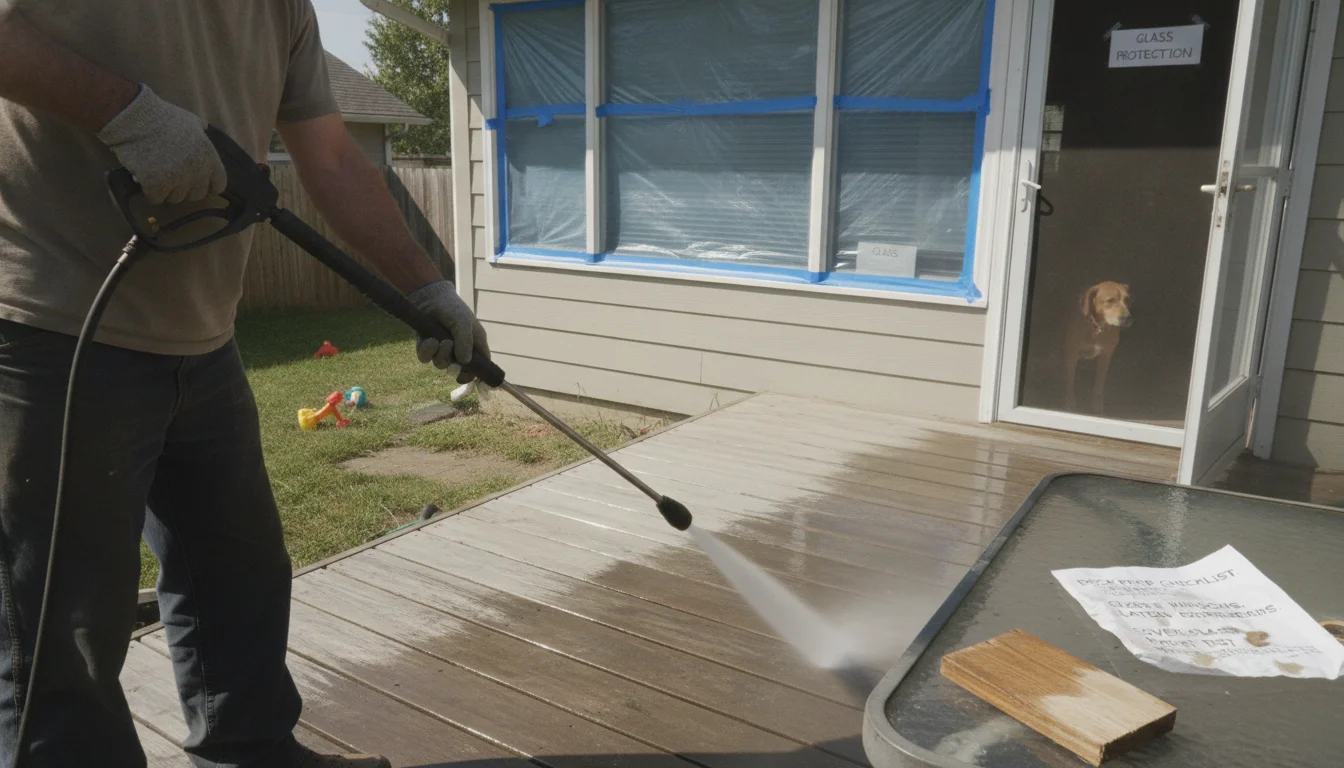
A little preparation goes a long way. Clear furniture and planters. Cover outlets and fixtures. Move grills out of spray range. Confirm GFCI outlets trip and reset properly. Tape plastic over door thresholds that meet the deck. Shield plants with tarps and pre-soak delicate shrubs so they’re less likely to absorb cleaner.
Sweep debris from gaps and remove leaves. Pick up toys and tools. Remove mats and hang them to dry later. Use a plastic scraper to lift debris from board edges if needed so rinse water can carry soil away.
Test a small, hidden area first. Start with low pressure and a wide-angle nozzle. If fibers stand up or lines appear, back off. If soil lifts cleanly, continue and adjust only in small increments.
Pre-wet the deck with clean water to slow down cleaner absorption, even out dwell time, and reduce spotting. Wet railings and posts as well as nearby siding and windows so any splash can be rinsed right away.
Protect landscaping, furniture, outlets, and nearby surfaces
Cover delicate plants with breathable fabric if needed—avoid trapping heat under plastic in direct sun. Mask lower windows to prevent hard-water dots. Close windows and latch doors. Keep pets inside until the area is dry.
Patch test, set pressure, and pre-wet strategy to prevent spotting
A test pass defines your safe settings. Pre-wetting helps boards absorb more evenly. Keep cleaner moving and wet, then rinse in sections to avoid lap lines where one spot dries while another stays soaked.
5. Step-by-step washing technique that protects wood, stain, and sealant
These steps explain how to pressure wash a deck while protecting wood fibers and any existing stain or sealer.
Once prepped, divide the deck into manageable zones and plan your exit. Maintain a steady stance and hold the wand with two hands. Work with the grain so fibers lay flat. Feather strokes into dry areas to avoid hard edges.
- Apply a deck cleaner evenly.
- Allow proper dwell time while keeping the surface wet.
- Rinse with a wide-angle tip at low pressure.
- Wash boards with the grain using even, overlapping passes.
- Rinse rails, posts, and stairs from top down.
- Finish with a thorough rinse of the entire deck and any adjacent surfaces.
Use about a one-third overlap between passes to avoid missed strips and tiger lines. Keep the wand moving before pulling the trigger and for a moment after releasing it to prevent start-stop marks. On stained decks you plan to keep as-is, focus on rinsing; avoid aggressive passes that could strip the finish.
Manage runoff carefully. Guide water away from flower beds. Lift mats so water can escape. Rinse any splash on siding or windows immediately. If suds pool, pause and flush with clean water to dilute.
Maintain distance, angle, and feathering with the grain
Hold the tip roughly 8–12 inches above the deck. Keep the spray about 10–20 degrees off the surface. Feather into the dry zone at the end of each pass. Long, smooth strokes reduce marks; short, choppy moves can imprint the wood.
Rinse patterns, overlap control, and runoff management
Rinse top-down on rails and posts. On floorboards, rinse with the grain in full board lengths when possible. Keep a consistent one-third overlap. Watch water flow and steer it toward a safe drainage area.
6. Post-wash care: neutralize, dry, and plan finishing
After alkaline cleaners, wood pH can rise, which may interfere with stain adhesion. A wood brightener with oxalic or citric acid helps bring pH closer to neutral and reduces tan or rust marks. Apply brightener per label, keep it wet during dwell, then rinse thoroughly.
Allow the deck to dry. Sun and breeze in Slidell help, while shade and cool air slow drying. Don’t rush to stain or seal—trapped moisture can cloud the finish or shorten its life. Many pros use moisture meters; if you don’t have one, waiting longer is safer.
Light fuzz after cleaning is common. A quick pass with a pole sander and fine-grit paper smooths fibers so stain lays evenly. Vacuum or blow off dust, then wipe rails clean before finishing.
Choose a finish that fits your exposure and style. Clear sealers highlight natural tone but need more frequent maintenance. Semi-transparent stains add color and UV protection while showing grain. Solid-color stains hide more defects but look more like paint. Consider Louisiana sun and humidity when you select products and plan timing.
pH balancing and brightening for wood after alkaline cleaners
Brighteners serve two roles: color restoration and pH correction. Apply with a pump sprayer after rinsing away the main cleaner. Keep it wet for the full dwell time, then rinse thoroughly so residue won’t affect stain.
Dry time, moisture testing, sanding, and timing for stain or sealer
Dry time depends on sun, shade, airflow, and weather. Allow extra time in cool or damp conditions. Sand lightly to tame raised grain, remove dust, and coat during steady, mild weather for an even cure.
7. Troubleshooting and long-term maintenance
Even careful washing can leave a hiccup or two. You may notice tiger striping (light and dark bands) or fuzzing (lifted wood fibers). Blend the area with gentle, even passes, allow it to dry, then sand lightly if fibers remain raised.
Lap marks appear when one area dries while the next stays wet. Work smaller sections and keep edges damp as you go. On stained decks, visible lap lines in the finish usually require sanding and a new coat to even the color.
Etching shows as grooves or rough areas caused by excessive force. Stop, lower pressure, widen the tip, and blend from the undamaged side with soft, even passes. Severe etching sometimes calls for board replacement.
Build a simple care routine. Sweep often, rinse spills quickly, and schedule light washes each season so grime doesn’t get ground in. In shade, treat early signs of mildew with a gentle cleaner. If your home life centers around the pool, consider Pool Deck Cleaning in Slidell, LA. Businesses with patios or walkways can look into Commercial Pressure Washing in Slidell, LA to keep surfaces safer and welcoming.
Fixing lap marks, fuzzing, tiger striping, and etching
Blend stripes with gentle overlap passes. Let areas dry and sand remaining fuzz. Reduce PSI and choose a wider tip to avoid new marks. Replace boards only if deep grooves remain.
Seasonal cleaning schedule and preventative tips to keep decks cleaner longer
Set a spring-and-fall rinse habit. Trim plants back from rails to improve airflow. Use door mats but lift and dry them regularly. Keep gutters clear to reduce splashback that stains the first boards.
Frequently Asked Questions
Q1: What nozzle is safest for cleaning a wood deck?
A wide-angle tip, like 25° or 40°, is usually safest. It spreads water to lower impact. Start with the 40° on railings and older boards. Test a small spot and adjust only if needed. If you’re learning how to pressure wash a deck, begin gently and increase only when required.
Q2: Can pressure washing remove old deck stain?
Light washing won’t strip a sound, solid finish. It can lift loose stain but not remove intact coats. To remove old stain, use a stripper per label, then rinse and brighten. After the wood dries, sand or recoat as needed.
Q3: How long should a deck dry before staining?
Dry time depends on sun, shade, and airflow. Allow extra time in cool or damp weather. Many pros use a moisture meter to confirm dryness. When in doubt, wait longer and sand lightly before coating for a smooth finish.
Q4: Is soft washing better for composite decking?
Soft washing is often the better first step for composites. Use low pressure with the right cleaner to break down grime, then rinse with a wide-angle tip. Avoid hot water or narrow nozzles unless your deck’s manufacturer approves them. Always test in a small area first.
Q5: How do I choose a deck cleaning service near me?
Look for local teams with strong reviews, clear methods, and safe practices. Search for Deck Cleaning Services in Slidell, LA and read recent feedback. Ask about deck-safe detergents, pressure ranges, test spots on inconspicuous areas, plant and window protection, and how they prevent etching and lap marks.
Key takeaways
- Start gentle: wide-angle tip, low PSI, steady distance, and smooth passes.
- Cleaners first: let detergents work; then rinse with care.
- Protect wood: pre-wet, test a hidden spot, and follow the grain.
- Finish right: brighten if needed, dry thoroughly, and sand light fuzz.
- Maintain: simple seasonal rinses keep deep cleanings easier and safer.
Conclusion
A careful plan keeps decks safe and fresh in Slidell. Pressure Washing Slidell helps homeowners across the Slidell area with smart, gentle cleaning every week. When a space needs more help, lean on Deck Cleaning Services in Slidell, LA or learn about About Our Pressure Washing Team in Slidell, LA for next steps. Contact us.
If you are not sure which of these you are dealing with, it is worth having someone look at it before it turns into a bigger job. Get in touch with Pressure Washing Slidell today and we will tell you where you stand.