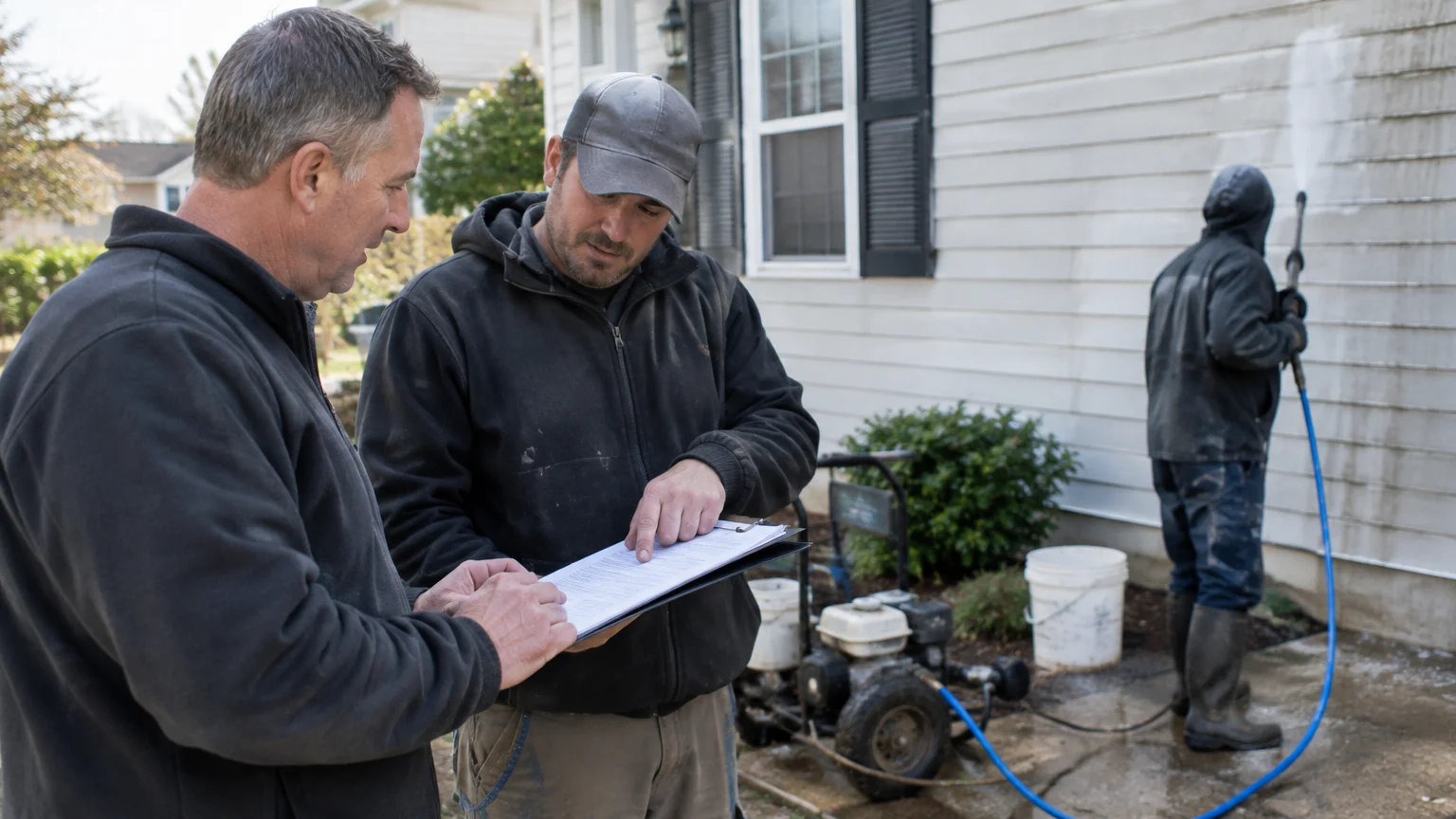
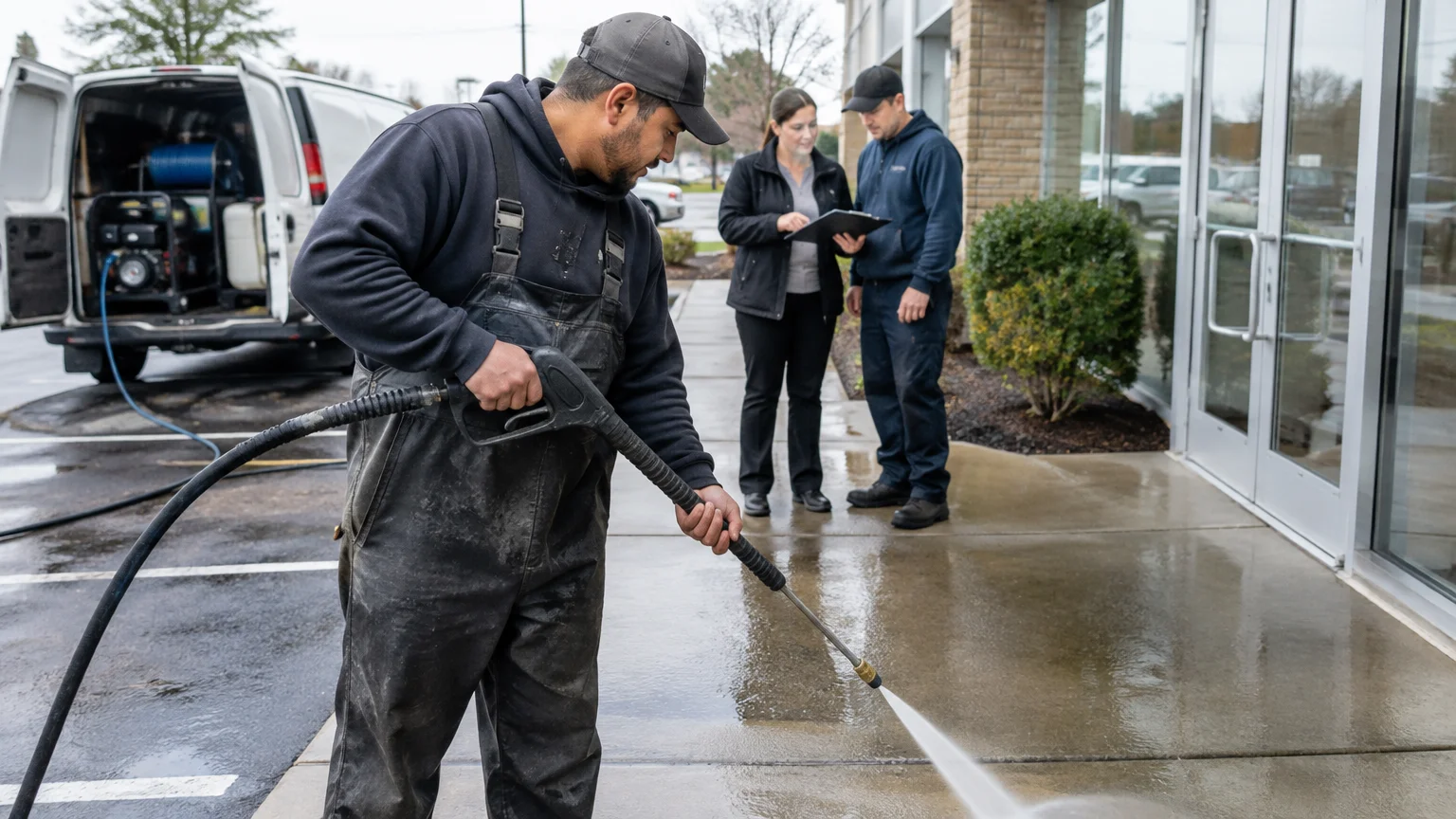
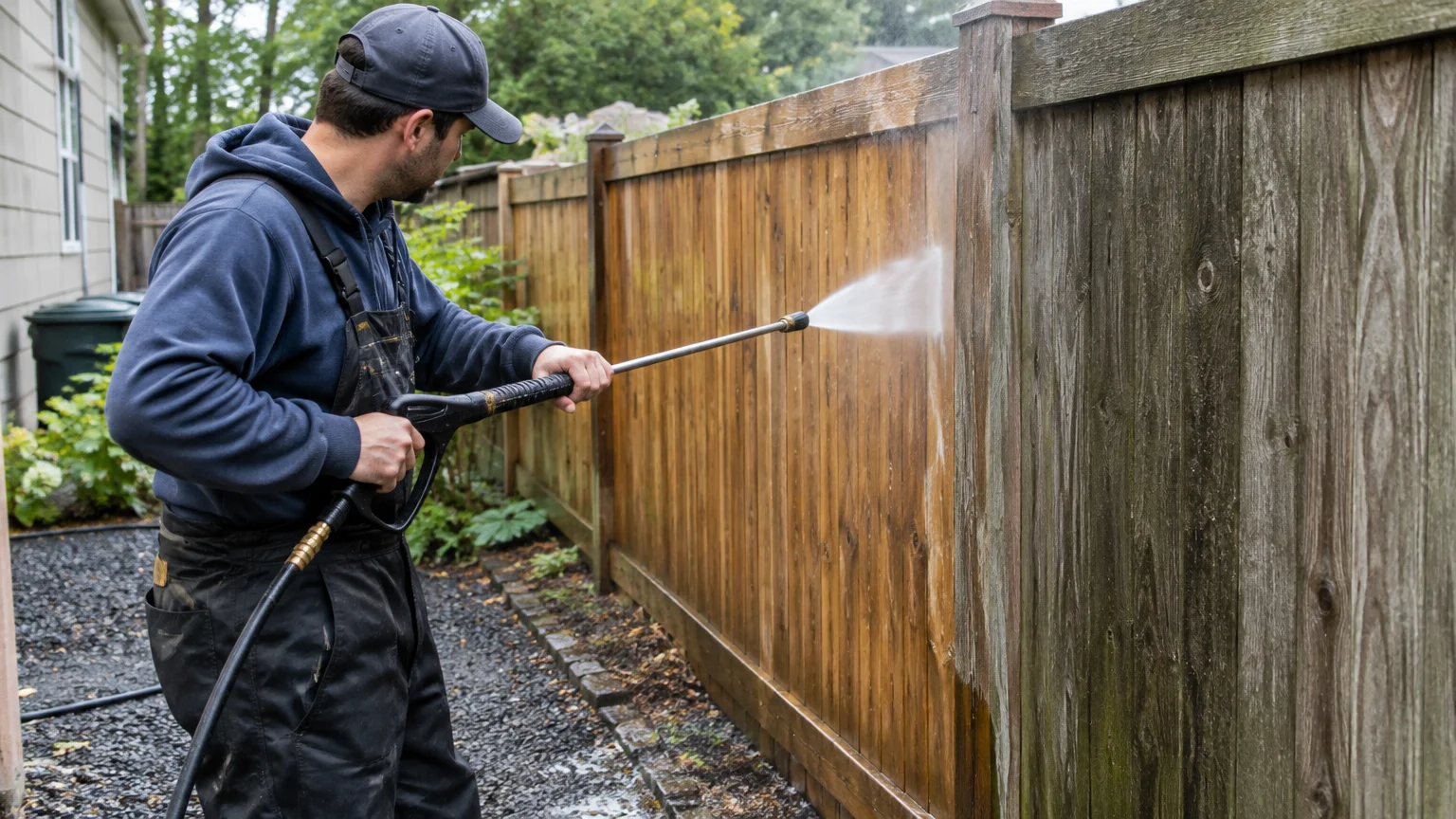
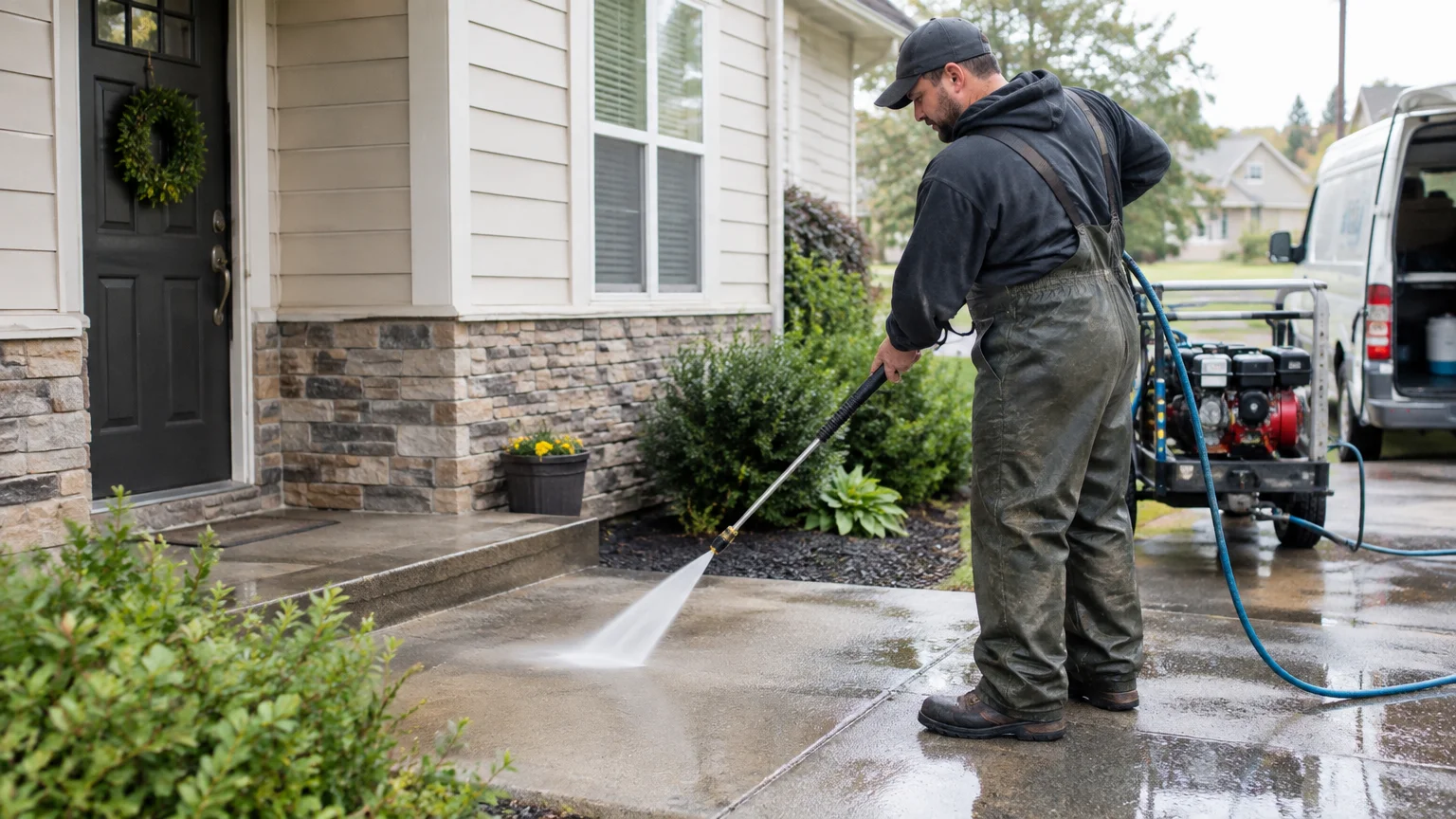
Hot water pressure washing works best when heat helps loosen grease, oil, gum, or thick grime. Cold water often handles dirt, dust, mud, pollen, and light outdoor buildup well. The right choice depends on the surface, stain, detergent, pressure, and safety needs. Heat helps, but more pressure is not always better.
Table of Contents

- What is hot water pressure washing?
- When does hot water clean better than cold water?
- Why must pressure be matched to the surface?
- How do hot and cold water methods compare on common surfaces?
- Does hot water pressure washing remove stains more effectively?
- When is DIY pressure washing no longer sensible?
- How should you choose between hot water and cold water cleaning?
- Frequently Asked Questions
What is hot water pressure washing?
Hot water pressure washing uses heated water, a pump, and a spray wand. Heat helps soften some residues before the spray carries them away. Cold water pressure washing uses the same basic process without added heat.
How heated water changes the cleaning process
Heat can make grease and oil less sticky. It may also help break down wax, gum, food waste, and some heavy grime. This can reduce the need for hard scrubbing. The water still needs enough pressure and flow to remove the loosened dirt.
Hot water does not replace good cleaning steps. A professional may first clear loose debris, apply the right detergent, wait, and then rinse. Dwell time means the time a cleaner stays wet on the surface. This gives the product time to work.
Why pressure and temperature solve different problems
Temperature softens certain residues, while pressure provides physical cleaning force. A strong spray may remove loose dirt but fail against oily film. Hot water may loosen that film, but too much pressure can harm paint, wood, mortar, or siding.
For homeowners, Pressure Washing Slidell can help explain which method fits the surface. This matters across Slidell, including Olde Towne Slidell, Eden Isles, Pearl River, Lacombe, North Shore, and nearby communities. The stain, material, access, and runoff plan matter more than choosing the strongest setting.
When does hot water clean better than cold water?
Hot water often works better when a surface has grease, oil, gum, food residue, or thick traffic film. Cold water is often enough for loose dirt, pollen, mud, dust, and light organic buildup. The method should match the soil, not just the way the stain looks.
Grease, oil, and other heat-sensitive residues
Parking areas, restaurant service spaces, dumpster pads, garages, and workshop floors may collect oily grime. Heat can soften this layer so detergent and water can remove it more fully. It may also help remove gum from sidewalks and sticky residue near doors.
Heat does not make every stain disappear. Old oil may have soaked into porous concrete. Rust, paint, and mineral marks may need a different treatment. A careful cleaner tests the area first and protects plants, walls, drains, and doors.
Situations where cold water is usually enough
Cold water often works well for house siding, brick, patios, fences, decks, and walkways when the problem is loose dirt or dust. It can also rinse away detergent after a soft wash. Soft washing uses low pressure and a cleaning solution instead of force alone.
Cold water may be safer for heat-sensitive finishes, delicate sealants, and some painted surfaces. It can also suit small home jobs where grease is not the main problem. Homeowners should not assume hot water is always stronger or safer.
Why must pressure be matched to the surface?
Pressure must match the material because every surface has a point where force becomes damage. Concrete can often handle more pressure than vinyl siding or painted wood. The right method may use low pressure, a wider spray, more water flow, or a cleaning solution.
How surface material affects pressure selection
Sound concrete and some masonry can handle firm cleaning. Older concrete, cracked joints, pavers, and brick need more care. Vinyl siding, stucco, wood, roof shingles, and painted surfaces usually need lower pressure and close control.
A homeowner asking what PSI pressure washer to use on siding should know that one setting does not fit every home. PSI means pounds per square inch. It describes the force placed on the surface. Nozzle angle, distance, water flow, and surface age also change the result.
What can happen when pressure is too high
Too much pressure can strip paint, cut wood fibers, push water behind siding, damage mortar, or leave lines. It can also spread dirty water onto clean areas. On roofs, strong pressure may remove protective granules or shorten the life of the covering.
The safest approach starts with a small test area. The operator then adjusts the distance, nozzle, pressure, temperature, and detergent. More force is not a substitute for good judgment.
How do hot and cold water methods compare on common surfaces?
Hot and cold water can both clean well when the method fits the surface and soil. The main difference is how heat handles oily or sticky buildup. The best choice also depends on whether the surface is sealed, painted, porous, old, cracked, or near a waterway.
Concrete, driveways, and parking areas
Concrete driveways and parking areas often respond well to pressure washing. Cold water may remove mud, dust, algae, and loose grit. Hot water can help when tires, cooking waste, oil, or heavy traffic film create a greasy layer.
A driveway may still show a dark mark after cleaning if oil has soaked below the surface. Pretreatment, dwell time, surface-cleaning tools, and a controlled rinse can improve the result. A professional may also protect garage doors, landscaping, and nearby walks.
Siding, decks, roofs, and painted surfaces
Siding often needs low-pressure cleaning and the right solution instead of high heat or strong force. Vinyl siding can be damaged when water gets behind the panels. Painted wood and older decks may shed finish when cleaned too hard.
Roofs usually need special care. Strong pressure can harm shingles, while heat may affect some roof materials or sealants. Homeowners should not treat a roof like a driveway. Pool deck cleaning, fence cleaning services, and building washing services each need methods that fit their materials and surroundings.
Does hot water pressure washing remove stains more effectively?
Hot water pressure washing can remove some stains more effectively, especially when the stain contains oil, grease, wax, or sticky residue. It is less useful for rust, hard-water minerals, deep paint, or lasting color changes. The stain should be identified before treatment.
The difference between stains, buildup, and organic growth
Buildup is material sitting on top of a surface. A stain may have changed or entered the surface itself. Organic growth includes algae, mildew, and moss. These may need a suitable cleaner and enough contact time, not only hotter water.
For example, a green film on a patio may be organic growth. A black tire mark may contain rubber and oil. A white mark on brick may be efflorescence. Efflorescence is a mineral deposit left when water moves through masonry. Each problem needs a different plan.
Why detergent, dwell time, and agitation still matter
Detergent helps separate soil from a surface. Dwell time lets the cleaner work. Agitation, such as careful brushing or use of a surface cleaner, helps lift stubborn buildup. Heat can support these steps, but it cannot fix the wrong product or poor rinsing.
Cleaning success depends on the whole process, not one machine setting. A qualified cleaner also checks where wastewater will go. Runoff should not carry oil, chemicals, or heavy sediment into places where it may cause harm.
When is DIY pressure washing no longer sensible?
DIY pressure washing can make sense for simple upkeep on durable, flat surfaces. A homeowner may sweep debris, rinse light dirt, clean small items, and follow the equipment maker’s instructions. Professional help becomes sensible when the surface is fragile, the stain is unknown, or the work creates safety and runoff concerns.
Warning signs that a surface or stain needs professional judgment
A homeowner should pause before cleaning when any of these conditions apply:
- The surface is painted, cracked, soft, weathered, or hard to identify.
- Water could enter siding, vents, outlets, windows, or wall openings.
- The area has oil, chemical residue, mold, heavy rust, or unknown stains.
- The work requires ladders, roof access, traffic control, or special protection.
- Runoff could reach a storm drain, pool, garden, or neighboring property.
A professional can also help when an earlier cleaning attempt left stripes, marks, or damaged finish. This can help rental owners, property managers, and businesses that need a repeatable plan.
Equipment, safety, and runoff concerns
Pressure washers can cause cuts, eye injuries, slips, and electric shock. Operators need suitable shoes, eye protection, safe hose placement, and care near power sources. They should never aim the spray at people, animals, windows, or electrical parts.
The equipment may also be too heavy or powerful for a small job. A trained team can select the right nozzle, control overspray, and manage wastewater. Pressure Washing Slidell serves local property owners and can assess whether hot or cold cleaning is safer.
How should you choose between hot water and cold water cleaning?
The best choice starts with the surface and the material being removed. Hot water is a strong option for oily, greasy, or sticky buildup. Cold water often works for ordinary dirt and light outdoor growth. The safest plan uses the least force and heat needed for a clean result.
Questions to ask before selecting a cleaning method
Before starting, the property owner should consider:
- What is the surface made of, and is it sealed or painted?
- Is the problem dirt, oil, organic growth, rust, mineral buildup, or damage?
- Could water enter walls, fixtures, outlets, vents, or windows?
- Where will dirty water flow during rinsing?
- Can the work be done from the ground without unsafe climbing?
- Does the equipment allow control of heat, pressure, flow, and spray pattern?
A simple patio or driveway may suit careful homeowner cleaning. A roof, large building, commercial site, or unknown stain deserves more planning. The final cost is confirmed on a quote because size, access, surface condition, method, and urgency can change the work involved.
Key takeaways for planning the right pressure washing approach
- Hot water helps most with grease, oil, gum, and sticky grime.
- Cold water often handles dust, mud, pollen, and loose dirt.
- Pressure must match the surface, not just the stain.
- Detergent and dwell time can matter as much as heat.
- DIY is reasonable for simple, safe upkeep, but not every surface or stain.
Conclusion
Hot and cold water cleaning are useful for different problems. Hot water pressure washing can loosen oily or sticky soil, while cold water may suit routine outdoor cleaning. Surface type, pressure, detergent, runoff, and operator safety should guide the choice. Contact us to discuss the right cleaning approach with Pressure Washing Slidell.
Frequently Asked Questions
Is hot water pressure washing better than cold water cleaning?
Neither method is best for every job. Hot water can work better on grease, oil, gum, and sticky traffic film. Cold water often handles dirt, dust, mud, and light buildup well. The surface, stain type, detergent, pressure, and runoff plan should guide the choice.
What PSI pressure washer is needed to clean siding?
Siding usually needs controlled, lower-pressure cleaning instead of the strongest setting. The right PSI depends on the siding material, age, condition, nozzle, distance, and water flow. A test area helps prevent damage. Vinyl, painted wood, stucco, and older siding may each need a different approach.
Can hot water pressure washing damage a house?
It can cause damage when heat, pressure, or spray direction does not suit the material. Water may enter behind siding, paint may peel, or wood may develop marks. Heat is not always the risk. Poor distance, nozzle choice, and surface judgment can also cause problems.
Does hot water remove algae and mildew better?
Not always. Algae and mildew often need a suitable cleaning solution and enough dwell time. Hot water may help in some cases, but strong pressure can spread growth or damage the surface. The safest method depends on the material, growth level, nearby plants, and wastewater controls.
How often should a house or business exterior be washed?
There is no single schedule for every property. Weather, shade, trees, traffic, nearby dust, surface type, and local moisture affect buildup. A property may need cleaning when dirt, algae, or stains return. A busy commercial site may need a regular maintenance plan.
If you are unsure what you are dealing with, have the surface checked before the problem grows. Pressure Washing Slidell can help property owners understand which cleaning method fits the job.
If you are not sure what you are dealing with, it is worth having someone look at it before it turns into a bigger job. Get in touch with Pressure Washing Slidell today and we will tell you where you stand.