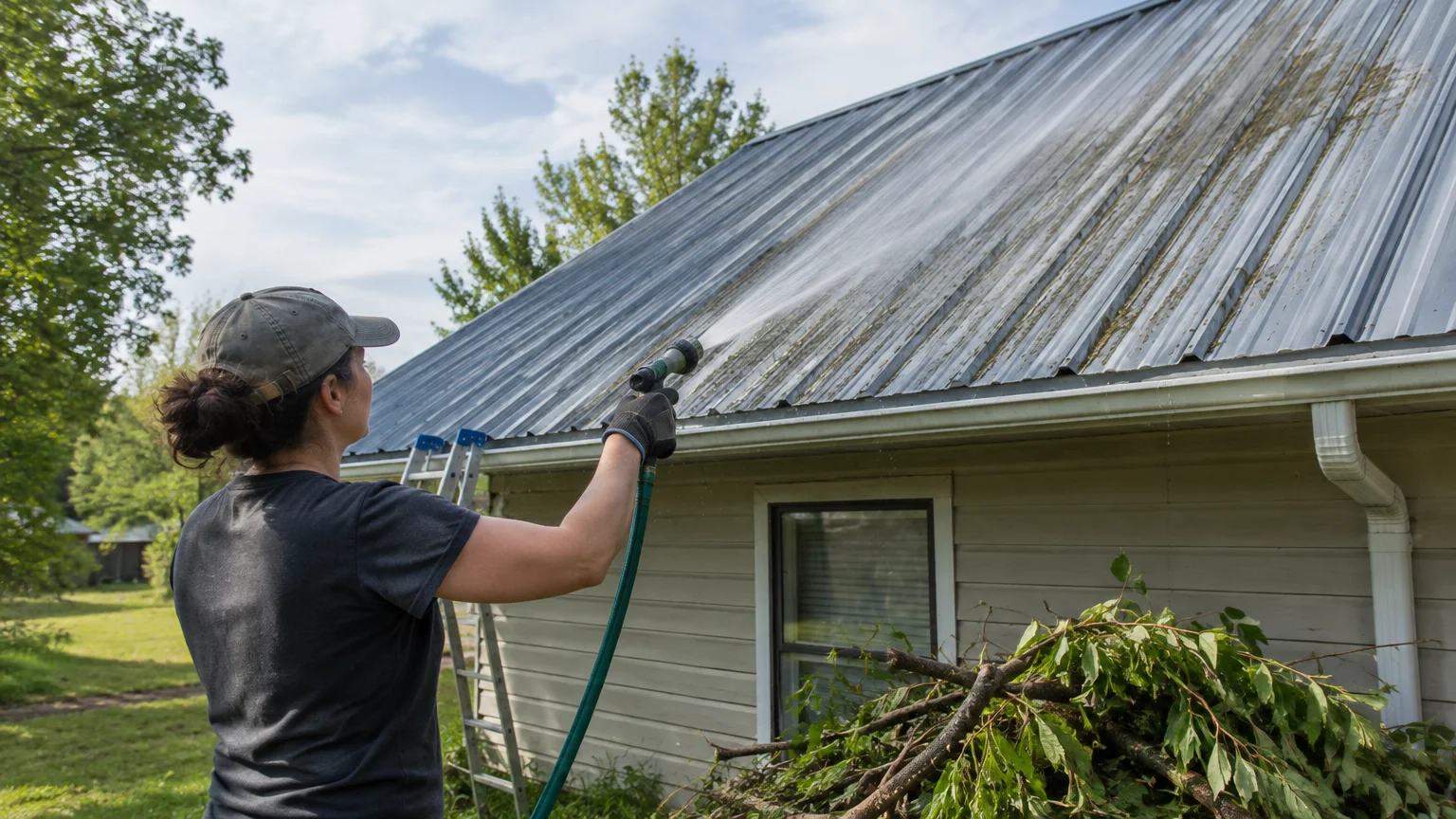
Metal roof cleaning needs a gentle method that protects paint, seams, fasteners, and sealants. Low-pressure soft washing can remove algae, moss, black streaks, and dirt without forcing water under panels. The right plan starts with an inspection and ends with a controlled rinse that protects the roof and nearby areas.
Metal roofs can look very strong, but they still need careful care. Their paint, screws, sealants, and seams can suffer during rough cleaning. A safe process checks the roof finish, slope, age, and nearby plants before any solution is used.
For homeowners and property owners, Pressure Washing Slidell helps clients understand which cleaning method fits their roof. This care also matters for shops, offices, rental homes, and other buildings across the area, including Olde Towne Slidell, Eden Isles, Pearl River, Lacombe, North Shore, and nearby communities.
Table of Contents
- Why does metal roof cleaning require a different approach?
- How do roof coatings affect the cleaning method?
- Why do panel seams and fasteners matter during cleaning?
- What cleaning solution is safest for a metal roof?
- Can pressure washing damage a metal roof?
- How should a metal roof be prepared and rinsed?
- How often should a metal roof be cleaned and inspected?
Why does metal roof cleaning require a different approach?
Metal roof cleaning needs a different approach because the roof has a finished surface and many joined parts. Panels may be made from steel or aluminum. They can have paint, stone coatings, sealants, screws, clips, and overlapping edges. Each part may react in a different way to water, pressure, and cleaning products.
How metal roofing differs from asphalt shingles and other materials
Asphalt shingles have loose mineral granules that can come off under strong pressure. Metal roofs do not have those granules, but they are not safe to blast. A pressure stream can scratch paint, bend thin panels, loosen sealants, or force water under laps.
Tile, cedar shake, and slate roofs also need special care. Tile can crack, cedar can split, and slate can break under foot traffic or high pressure. Metal may be easier to walk on when dry and safe, but trained workers must still follow roof safety rules.
What can go wrong with overly aggressive cleaning
Strong cleaning can leave more than surface marks. It may expose bare metal, damage a protective finish, or open a path around a screw. Water can then reach insulation, decking, walls, or ceiling areas. The damage may not show until the next storm.
A homeowner can safely look for stains from the ground, trim nearby branches, and clear loose debris from easy-to-reach areas. Roof work becomes a professional job when the roof is steep, wet, fragile, high, or near power lines. Pressure Washing Slidell can help explain safe options for homes and businesses without treating every roof in the same way.
How do roof coatings affect the cleaning method?
Roof coatings affect both the cleaning solution and the rinse pressure. A coating is a protective layer placed over metal to help resist weather, rust, and sun. It may be factory-applied paint, a resin finish, or a later restoration layer.
Common metal roof coatings and their cleaning needs
Many metal roofs have painted finishes made for outdoor use. Some older roofs may have faded, chalky, or peeling paint. Other roofs may have a special waterproof coating that needs a product approved by its maker. The roof’s age and finish should be checked before any solution is applied.
A small test area is a wise first step. The test should be made in a hidden spot and rinsed fully. The worker can then check for color change, streaking, chalk, softening, or loss of gloss. A clean roof is not a good result if the finish has been harmed.
How to protect painted and protective finishes
Cleaning products should be mixed and used as directed. A stronger mix does not always clean better. It can fade paint, harm plants, stain siding, or affect metal trim. The solution should stay wet only as long as needed, followed by a full rinse.
Workers should avoid dragging hoses, tools, or ladders across painted panels. They should also protect skylights, vents, solar equipment, gutters, windows, and painted walls. Solar Panel Cleaning may help when rooftop panels collect the same dust and organic growth, but panels need their own safe cleaning process.
Why do panel seams and fasteners matter during cleaning?
Panel seams and fasteners matter because they are common points for water entry. A seam is where two roof panels meet. A fastener is a screw or clip that holds a panel in place. Sealants and washers help close these joints, but they can age or fail.
How seams, laps, and penetrations affect water flow
Metal roofs use seams, laps, ridges, valleys, vents, and other openings to guide water away. A pressure stream aimed across a lap can push water in the wrong direction. It can also lift old sealant or move debris into a joint.
Roof penetrations are places where something passes through the roof. Examples include vents, pipes, skylights, and mounting brackets. These areas need a slow visual check before cleaning. A worker should note cracked sealant, open edges, rust, loose trim, and signs of past leaks.
What to check around screws, washers, and sealants
Exposed screws should sit firmly and have intact washers. A washer that is cracked, flattened, or missing may let water in around the screw. Rust around a fastener can point to a wider problem, especially when the metal beneath it looks thin or swollen.
Cleaning does not replace roof repair. A homeowner can inspect visible trim from the ground and report ceiling stains or attic moisture. A professional should handle roof access, sealant work, loose panels, and repairs. Gutter Cleaning Services can also help when blocked gutters cause water to back up near lower roof edges.
What cleaning solution is safest for a metal roof?
A mild, roof-safe solution used with low pressure is usually the safest starting point. Soft washing uses cleaning solution and gentle water flow instead of force alone. It helps loosen algae, moss, mildew, black streaks, bird residue, and stuck-on grime.
How soft washing helps remove algae, moss, and grime
Algae can leave dark streaks on a roof. Moss can hold moisture against the surface. Lichen may attach more firmly and take longer to release. A suitable soft wash solution breaks down organic growth so it can be rinsed away with less force.
The cleaner should first identify the growth and the roof finish. A product that works on one surface may harm another. The area below the roof also matters. Plants, painted surfaces, stone, wood, and metal gutters may all need different protection.
Why solution strength and dwell time must be controlled
Dwell time means how long a cleaning solution stays wet on the surface before rinsing. Too little time may leave growth behind. Too much time can dry the solution and increase the chance of marks or plant damage.
The surface should stay wet during the process. Workers can clean smaller sections instead of covering the full roof at once. They should watch wind, heat, shade, and runoff. Soft Washing Services may help when a roof needs gentle treatment instead of aggressive pressure.
Can pressure washing damage a metal roof?
Yes, pressure washing can damage a metal roof when the pressure, nozzle, distance, or direction is wrong. The risk is higher on old paint, thin panels, rusted areas, open seams, and worn sealants. Metal roof cleaning should focus on controlled rinsing, not maximum force.
When pressure creates avoidable risks
A narrow nozzle can act like a cutting tool. It may strip paint, leave lines, or force water under panel edges. Pressure can also bend soft flashing and damage caulk around vents. Even when the roof looks clean, hidden water entry may create a later repair problem.
A homeowner does not need a pressure washer for every roof stain. Ground-level checks, gentle hose rinsing from a safe position, and removal of nearby branches are often reasonable upkeep. No one should climb onto a slick or steep roof to save time.
How professionals balance rinsing power with surface protection
A careful worker chooses a wide spray pattern, keeps the wand at a safe distance, and avoids spraying against seams. The goal is to rinse away loosened dirt without wearing down the coating. The worker should also control where dirty water travels.
The right method can change during the same job. A clean painted panel may handle a gentle rinse, while a rusted edge may need hand care or repair first. Professional Pressure Washing services can assess these differences before choosing equipment and cleaning steps.
How should a metal roof be prepared and rinsed?
Preparation helps prevent damage before cleaning begins. The roof, building, grounds, and drainage paths should be checked first. This planning also helps keep dirty water away from doors, windows, walkways, plants, and nearby surfaces.
What to inspect before cleaning begins
The inspection should look for loose panels, exposed screws, cracked sealant, rust, damaged flashing, blocked gutters, and weak roof edges. Workers should also note skylights, vents, antennas, solar equipment, and areas with old repairs.
A simple preparation list includes:
- Move outdoor furniture and fragile items away from runoff.
- Cover or wet plants before cleaning begins.
- Close windows, doors, and nearby vents.
- Check gutters and downspouts for clear water flow.
- Mark damaged areas that need repair before washing.
The roof should not be cleaned during unsafe wind, lightning, or heavy rain. A wet metal roof can become very slippery. Safe access matters more than finishing the job quickly.
How to manage runoff, landscaping, and surrounding surfaces
Runoff should be guided toward safe drainage areas. Plants can be rinsed before and after cleaning to reduce contact with solution. Painted siding, decks, concrete, and vehicles should be protected from dirty water and overspray.
A careful rinse starts at the highest safe point and moves in a controlled direction. Workers should avoid pushing water under laps or toward open seams. They should also check gutters after the rinse. Cleaning Rain Gutter areas may be part of a wider maintenance plan when roof debris enters the drainage system.
How often should a metal roof be cleaned and inspected?
A metal roof should be checked when owners notice stains, moss, blocked drainage, rust, or changes after storms. Cleaning timing depends on trees, shade, humidity, roof slope, nearby dust, and the building’s surroundings. There is no single schedule that fits every property.
Signs that indicate it is time for professional attention
Dark streaks alone may be a surface issue, but spreading growth deserves a closer look. Moss can hold moisture against the finish. Rust spots, loose trim, dripping gutters, and ceiling stains may point to a repair need rather than simple cleaning.
Look for these warning signs:
- Stains that spread across several panels.
- Moss or lichen growing near seams or edges.
- Rust around screws, flashing, or cut panel ends.
- Water marks inside the attic or upper rooms.
- Gutters that overflow during normal rainfall.
- Peeling coating, chalking, or exposed bare metal.
A homeowner can safely document these signs from the ground. Roof access should be left to trained workers when the surface is steep, wet, fragile, or hard to reach.
How routine maintenance supports the roof system
Routine checks help owners find small issues before water reaches interior spaces. They also help keep gutters, downspouts, roof edges, and nearby siding working together. After major storms, owners should check for branches, dents, lifted trim, and new leaks.
A written maintenance record can note the roof material, coating type, visible damage, cleaning date, and areas that need watching. This record helps owners, tenants, property managers, and investors make better choices. Pressure Washing Slidell can discuss roof cleaning and related exterior care in a clear, practical way.
Key takeaways
- Metal roof cleaning should protect coatings, seams, fasteners, and sealants.
- Soft washing usually uses less force than aggressive pressure washing.
- Cleaning products need careful testing, mixing, dwell time, and rinsing.
- Roof damage should be repaired instead of hidden by a cleaning job.
- Safe access and runoff control matter as much as surface appearance.
Frequently Asked Questions
Is soft washing safe for a painted metal roof?
Soft washing can be safe for a painted metal roof when the product, strength, dwell time, and rinse method fit the coating. A hidden test area should be checked first. The worker should also protect plants, windows, siding, gutters, and other surfaces from solution and runoff.
Can bleach be used on a metal roof?
Some professional roof cleaning systems use a carefully controlled cleaning agent, but household bleach should not be poured on a roof without a plan. Strength, contact time, runoff, plants, and the roof coating all matter. The product label and coating guidance should direct the process.
How can black streaks be removed from metal roofing?
Black streaks can often be removed with a roof-safe soft wash solution and a gentle rinse. The streaks may come from algae or other organic growth. Scrubbing hard or using a narrow pressure stream can harm the finish, so the roof material should be checked first.
Should gutters be cleaned before or after the roof?
Gutters may need attention before and after roof cleaning. Clearing them first helps water drain during the wash. Checking them again afterward removes loosened debris. Owners should also confirm that downspouts discharge safely and do not send dirty runoff toward doors or foundations.
Can a homeowner clean a metal roof without a professional?
A homeowner can inspect the roof from the ground, remove nearby branches, and watch for stains or leaks. Climbing onto a metal roof is risky, especially when wet or steep. Professional help is safer when the roof has damage, difficult access, old coatings, or heavy growth.
Conclusion
Metal roof cleaning is not just a matter of spraying until the panels look bright. The safest method protects the coating, respects panel seams, avoids damaged fasteners, and controls runoff. Soft washing often provides a better path than strong pressure, but the roof’s condition must guide each step.
Pressure Washing Slidell serves property owners who want clear guidance for roof care and nearby communities. Slidell property owners can contact the team to discuss roof care needs. Contact us to discuss safe metal roof cleaning for the property.