Pressure washing solar panels is usually unsafe because strong water can harm glass, seals, and nearby wires. Check the maker’s care guide before cleaning, and use only gentle methods it allows. In Slidell, dust, pollen, trees, and rain can affect how much grime gathers on a solar array.
Table of Contents
- Why is pressure washing the wrong tool for solar panels?
- What kinds of dirt and buildup affect solar panels?
- Can dirty solar panels reduce their performance?
- How can solar panels be cleaned safely?
- When should solar panels be cleaned?
- Should you clean solar panels yourself or hire a professional?
- How can you protect solar panels between cleanings?
- Frequently Asked Questions
Why is pressure washing the wrong tool for solar panels?
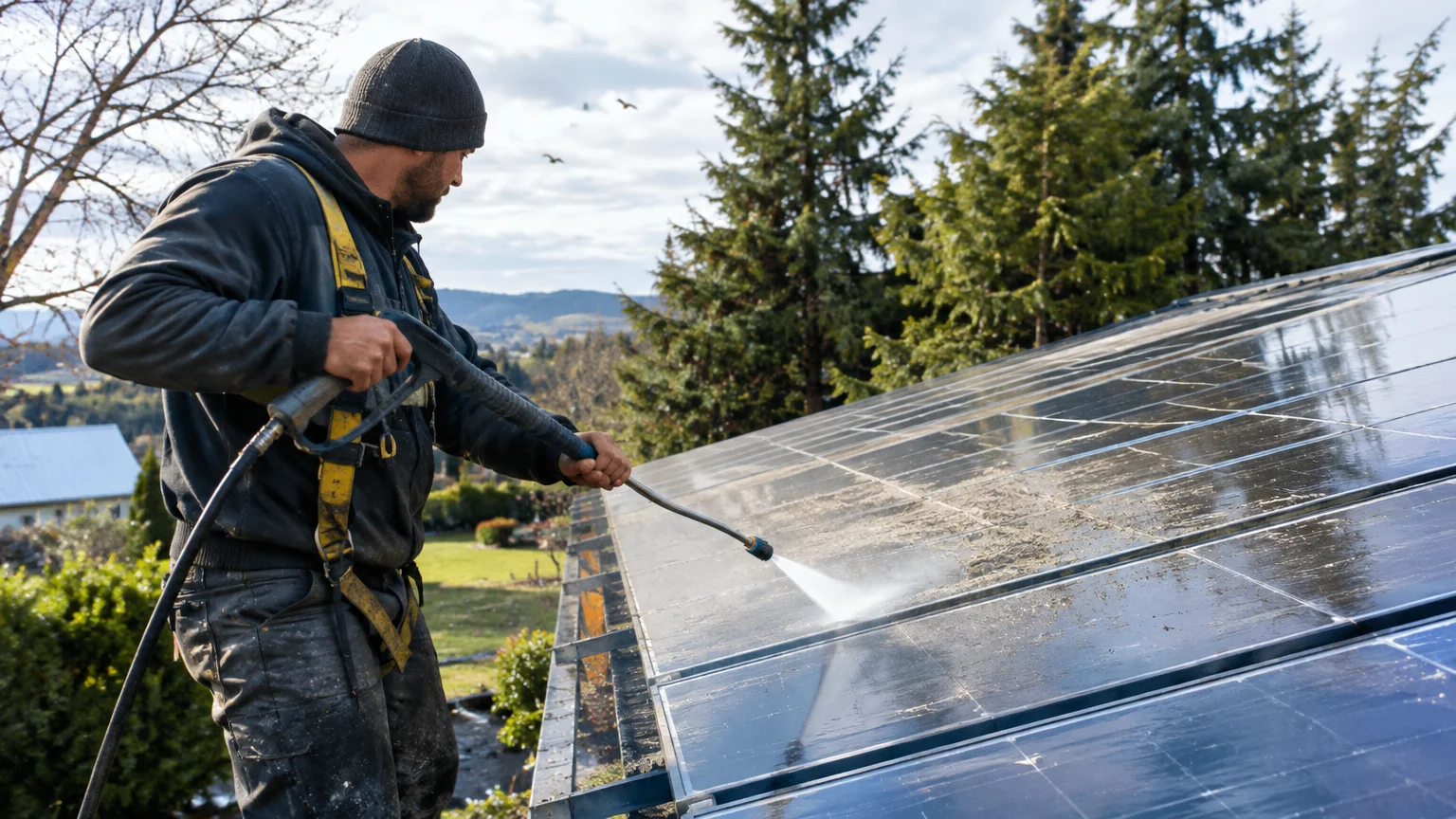
Pressure washing can force water into panel edges and harm delicate parts. It may scratch the glass or loosen seals around the frame. Solar panels face rain and wind, but that does not mean they can take a strong spray from close range. Start with the panel maker’s cleaning guide before choosing any method.
How can high pressure cause damage?
A pressure washer sends water out with much more force than a garden hose. A close spray may harm the seals around a panel or push water into places it should not reach. It may also damage wires, connectors, or other parts of the solar system. Some harm may not be easy to spot from the ground.
Hard tools can scratch panel glass, too. Grit trapped under a brush can leave small marks that make the surface harder to clean later. Strong pressure does not make cleaning safer or more careful. It can turn a simple cleaning task into a repair issue.
Pressure washing is useful on some strong outdoor surfaces, but solar panels need another approach. Even soft washing, which uses low-pressure water and cleaning products, should not be used on panels unless their maker approves it. A method made for siding or roofs may not suit solar equipment. Always check before directing water or cleaner at an array.
Why should the maker’s guide come first?
Each panel system may have its own care rules. The maker’s guide can say which tools and cleaning steps are safe. It may also tell owners when to leave the panels alone. Pressure Washing Slidell encourages Slidell property owners to read those directions before picking a cleaning method.
A warranty is a promise from the maker to cover certain problems under set terms. Cleaning in a way that goes against the guide may affect that protection. The guide may also point out parts that only a trained worker should handle. If you cannot find the instructions, ask the solar installer or panel maker what to do next.
What kinds of dirt and buildup affect solar panels?
Solar panels can collect dust, pollen, bird droppings, leaves, and other outdoor dirt. The type and amount depend on where the panels sit. A home near trees may get more leaves and pollen than a home in an open area. A nearby road or work site may leave fine dust on the glass.
Which common marks may appear?
Light dust can settle across a panel over time. Pollen may leave a yellow or green film in some seasons. Bird droppings can stick in one spot and block sunlight from reaching the cells below. Leaves and twigs may rest along the frame or on nearby roof areas.
Some marks come from water that dries on the panel. Mineral deposits are marks left behind when water with minerals dries. They may look like pale spots or rings. Scrubbing hard can scratch the glass, so follow the maker’s advice instead of using a rough pad.
Organic growth is plant-like material, such as algae or moss. It may grow on nearby roof surfaces, but it is not the same as dust on a panel. A view from the ground can help show where the buildup sits. In Slidell, also think about shade from nearby branches and other site conditions.
Do all stains need to be removed?
Not every speck means the panels need cleaning. Rain may rinse away loose dust, while stuck droppings or heavy dirt may stay in place. Cleaning too often can add risk without helping the system. The panel guide can help you decide what buildup matters and which tools are allowed.
Avoid strong cleaners, paint removers, and household products unless the maker says they are safe. These products may leave a film or harm the panel surface. If a mark will not come off with a gentle method, do not scrape at it. Ask a qualified provider to check the panel instead.
Related outdoor jobs have their own needs, too. House washing and driveway washing prep do not mean that every surface should get the same spray or cleaner. A driveway can often take more force than delicate solar glass. Tell a cleaning provider what surface needs care before work begins.
Can dirty solar panels reduce their performance?
Buildup can block some sunlight from reaching solar cells, especially if it covers a wide area or stays for a long time. The effect depends on the kind of dirt, where it sits, and the panel setup. A few small marks do not always mean the system needs cleaning. Look at the full picture before acting.
How can residue affect sunlight?
Solar cells use light to make electricity. A layer of grime can reduce the light that reaches the cells below. A leaf or bird dropping can also shade part of a panel. The effect may vary across the array, so one dirty spot does not explain every change in system output.
Shade from a tree, chimney, or nearby building can also limit sunlight. That is different from dirt on the glass. Cleaning will not fix a shade problem. Looking at the panels and the area around them can help you tell these causes apart.
Does lower output always mean the panels need cleaning?
No. Output can change because of cloudy weather, shade, system settings, or equipment trouble. A sudden change may call for a system check rather than a wash. Compare the system’s records over time and look for a pattern instead of reacting to one low reading.
If the system shows a warning or a lasting change, check the maker’s guide or ask the solar installer for help. Do not open electrical parts or test wires. Pressure Washing Slidell can discuss exterior cleaning needs with property owners, while a solar system fault should go to a qualified solar professional.
How can solar panels be cleaned safely?
Safe cleaning starts with the maker’s directions and a plan to avoid falls and electrical risks. If the guide allows cleaning, gentle water and a soft, non-abrasive tool are usually safer than a pressure washer. Non-abrasive means the tool is not rough and is less likely to scratch. The panels should be cool, and no one should step on them.
What gentle tools may be suitable?
A soft brush or sponge made for delicate surfaces may help remove loose dirt. Use only tools and water methods allowed by the panel maker. A garden hose with gentle flow may suit some systems, but the guide should decide. Keep grit off the tool, since trapped dirt can scratch the glass.
Do not aim water at exposed wires, connectors, or damaged areas. Do not pull on cables or lift panel frames. If water does not remove a mark, do not scrub harder. A trained cleaner can look at the surface and choose a safer next step.
What should owners avoid?
Harsh cleaners, rough pads, metal scrapers, and strong spray can harm panels. Hot panels and cool water may also cause a sudden change in temperature. This can put stress on the materials. Cleaning in direct heat may make water dry too fast and leave marks, so follow the maker’s advice on timing and water use.
- Do not stand on a panel or lean tools against it.
- Do not use a pressure washer or a strong spray nozzle.
- Do not clean damaged panels or exposed electrical parts.
- Do not use chemicals unless the maker allows them.
These limits can help prevent damage. If the panels are hard to reach, the roof is steep, or the care guide is unclear, stop and seek qualified help. Do not take a fall risk just to remove a mark. The safest choice may be to leave the panels alone until someone can check them.
When should solar panels be cleaned?
There is no single cleaning plan that fits every solar array. Local weather, trees, birds, dust, and panel angle all affect how much grime gathers. Some systems may need only occasional care, while others may collect dirt sooner. Let the maker’s guide and a careful look at the site shape your plan.
Which site conditions matter?
Panels near trees may collect leaves, pollen, or bird droppings. Dry, dusty weather can leave a film, while rain may rinse away some loose dirt. Nearby building work or busy roads can add dust. Panel angle also affects how easily water and debris move off the surface.
In Slidell, watch for local seasonal patterns instead of setting a fixed routine without checking the panels. A view from the ground is often enough to spot heavy buildup or debris near the frame. This does not require climbing a ladder or touching the system. If something looks damaged, leave it alone and ask for help.
What signs may make cleaning worthwhile?
A visible layer of grime, stuck droppings, or debris that remains after rain may be worth a closer look. A lasting change in system readings may also be a reason to review the panel condition. Still, output changes can have other causes, so cleaning should not be the first answer every time.
Check the system guide before arranging any work. If panels are hard to reach or marks will not lift gently, a trained cleaner can assess them. Regular visual checks help owners notice changes without washing the array more often than needed. If the dirt is light and the system looks normal, there may be no need to clean it.
Should you clean solar panels yourself or hire a professional?
A homeowner can safely check the panels from the ground and do simple care allowed by the maker. A professional is a better choice when panels sit on a roof, are hard to reach, or have unclear cleaning steps. Falls and contact with electrical parts can cause serious harm. You do not need to hire someone for every visual check.
What can an owner safely do?
Owners can look for shade, loose branches, visible debris, and changes in system readings. They can read the care guide and keep notes about what they see. If panels are easy to reach without climbing and the maker permits gentle cleaning, simple upkeep may be possible. There is no need to arrange professional work for a ground-level check.
Do not climb onto a roof or lean from a ladder to reach panels. Do not handle wires, connectors, or damaged equipment. These are not simple cleaning tasks. If a job needs roof access, special tools, or work near electrical parts, leave it to trained people.
What should a cleaning provider know?
Ask how the provider follows the panel maker’s rules and protects the system during work. A suitable provider should explain the tools and water method before starting. They should also know when to stop and send a problem to a solar technician. Cleaning experience alone does not make a person qualified to fix electrical equipment.
Pressure Washing Slidell serves property owners and can talk through exterior cleaning questions. For solar faults, contact a qualified solar technician or installer. This keeps cleaning work separate from electrical checks and repairs. It also helps make sure that someone with the right skills handles the system.
How can you protect solar panels between cleanings?
Routine checks can help owners spot problems without risking panel damage. Keep an eye on visible debris and system records, but do not wash panels just because time has passed. The safest plan is to follow the care guide and act when there is a clear reason. A simple record of changes can also help later.
What checks are useful?
Look at the array from a safe place on the ground. Note heavy dirt, fallen branches, new shade, or visible damage. Check the system monitor for a lasting change, and compare it with normal conditions instead of one cloudy day. If a warning appears, follow the maker’s support steps.
Keep trees and loose branches from creating avoidable shade, but hire someone for work near a roof or electrical lines. Do not spray water toward wires or try to fix a loose part. A clear note about what changed can help a solar technician find the cause. If you see damage, do not touch the panel.
How can owners avoid extra buildup?
Owners cannot stop all dust, pollen, or bird activity. They can, however, notice new shade or debris before it sits for a long time. Keep nearby roof drains and work areas in good order when they can be reached safely. Never change panel hardware or add coatings unless the maker approves it.
Key takeaways
- Strong pressure can harm panel glass, seals, and nearby parts.
- Check the maker’s cleaning guide before using any tool or cleaner.
- Dirt may block sunlight, but lower output can have other causes.
- Ground-level checks are safer than roof or ladder access.
- Use a qualified professional when access or electrical safety is a concern.
Conclusion
Solar panels need care, but strong pressure is not the safe answer. Check them from the ground, read the maker’s guide, and watch system records. For hard-to-reach panels or stuck residue, Pressure Washing Slidell can discuss exterior cleaning needs. Learn more about solar panel cleaning and Pressure Washing Slidell, or Contact us to discuss your needs.
Frequently Asked Questions
Can rain clean solar panels?
Rain may wash away loose dust, but it may not remove stuck droppings or thick residue. Its effect depends on panel angle and the type of dirt. Check the maker’s care guide before adding any cleaning. Do not climb onto a roof to inspect panels after rain.
Can a pressure washer damage solar panels?
Yes. Strong spray may harm seals, scratch the glass, or reach wires and connectors. The risk depends on the equipment, distance, and panel design, but pressure washing is not a safe default. Follow the maker’s instructions and use only approved cleaning methods.
Is it safe to clean solar panels with soap?
Use soap or another cleaner only if the panel maker says it is safe. Some products can leave a film or harm panel parts. A soft tool and gentle water may be enough for some dirt, but the care guide should direct the method. Avoid rough pads and harsh chemicals.
How often should solar panels be cleaned?
The right timing depends on local weather, nearby trees, dust, birds, panel angle, and the maker’s advice. Some panels may need little cleaning, while others collect dirt sooner. Watch for visible buildup and lasting changes in system records instead of following a fixed schedule without checking.
Should a homeowner clean panels on a roof?
A homeowner should not climb onto a roof or reach from a ladder to clean panels. Falls and contact with electrical parts can cause serious harm. A ground-level visual check is safer. For roof access, stuck dirt, or unclear instructions, ask a trained professional for help.
If you are not sure what you see, have the panel checked before trying a risky cleaning method. Pressure Washing Slidell can help you discuss the next safe step for your property.
If you are not sure what you are dealing with, it is worth having someone look at it before it turns into a bigger job. Get in touch with Pressure Washing Slidell today and we will tell you where you stand.