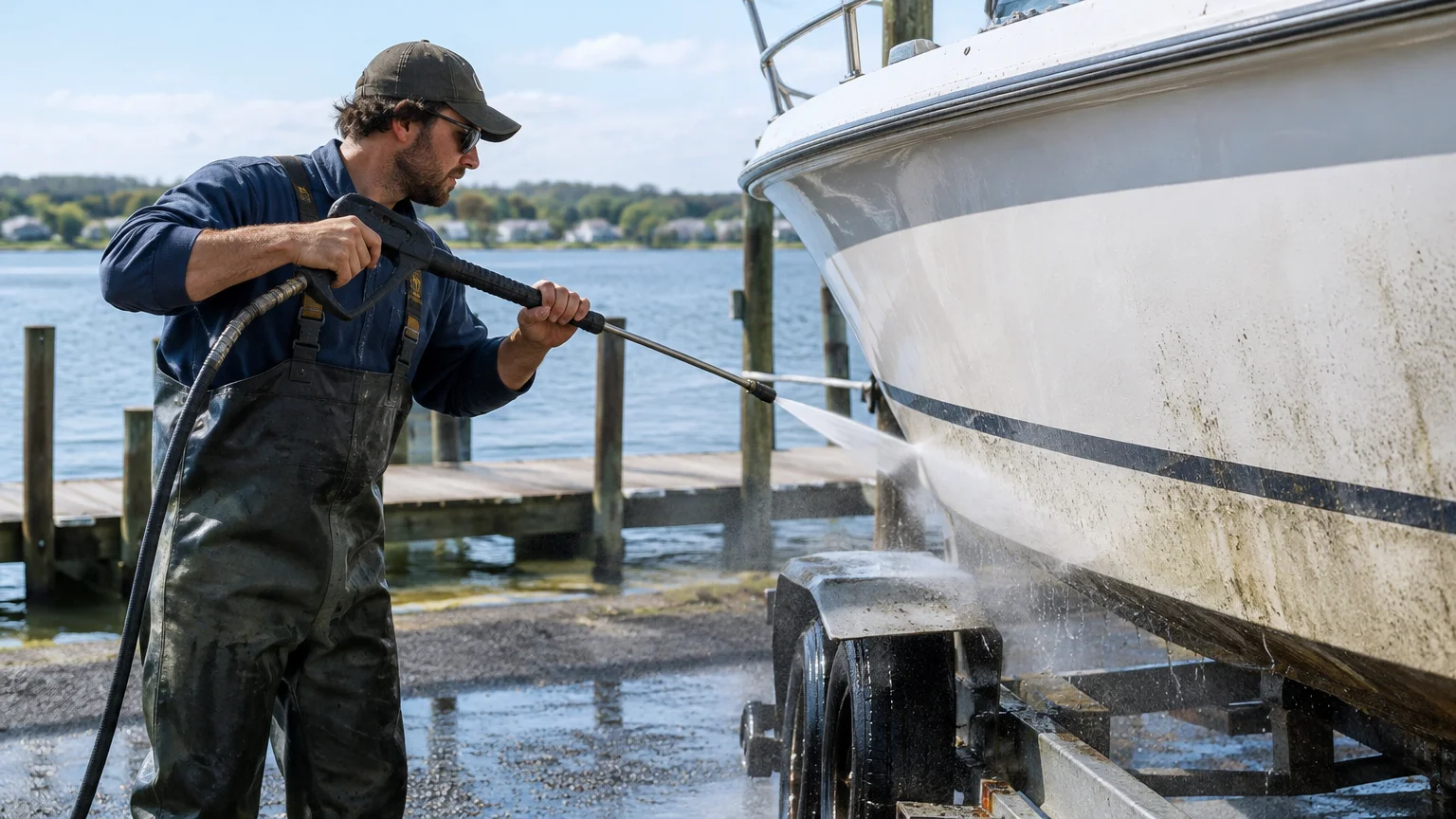
Boat power washing removes salt, algae, mineral film, bird waste, oil residue, and other grime from marine surfaces. The safest method depends on the boat material, stain type, and nearby water. Gentle pressure, proper cleaners, and careful rinsing help protect gelcoat, paint, wood, metal, docks, and seawalls from damage.
A boat may look clean after a quick rinse, yet salt can stay in seams and fittings. Algae can hide under rails, along dock edges, and inside nonskid patterns. A careful cleaning plan helps Pressure Washing Slidell protect the surface while improving the boat’s appearance.
Table of Contents
- What does boat power washing remove?
- How should different boat surfaces be cleaned?
- What pressure washing methods are safe for boats?
- How are docks and seawalls cleaned?
- Can pressure washing damage a boat, dock, or seawall?
- How often should boats, docks, and seawalls be cleaned?
- What should owners consider before booking marine cleaning?
- Frequently Asked Questions
What does boat power washing remove?
Boat power washing removes surface grime that plain water often leaves behind. It can wash away salt deposits, algae, mineral film, bird waste, light oil residue, and dirt carried by wind or rain. The method must match the surface, since some stains need a cleaner and gentle rinse instead of strong pressure.
Salt deposits, algae, and mineral buildup
Salt leaves a white or dull film on rails, windows, cleats, and painted areas. If it stays there, it can collect in seams and around hardware. Fresh-water rinsing helps with light salt, while a marine-safe cleaner may help remove thicker buildup.
Algae often appears as green, brown, or dark slippery growth. It may form on swim platforms, ladders, dock edges, and seawalls. Mineral buildup can look like chalky spots or a hard crust. These deposits may need careful treatment instead of a forceful spray.
Oil, bird droppings, and environmental residue
Boats can collect fuel film, grease, bird waste, pollen, leaves, and other outdoor residue. Oil marks may need a cleaner made for the surface. Bird waste should be softened before removal. Dry waste can scratch paint or gelcoat during wiping.
A homeowner can safely rinse loose dirt and clean small spots when the boat is stable. The cleaner label must also allow that use. Larger stains, slippery growth, and hard-to-reach areas need more care. Pressure Washing Slidell can help boat owners choose a method that fits the material and residue.
How should different boat surfaces be cleaned?
Different boat materials need different levels of pressure and care. Fiberglass and gelcoat may handle a careful wash, but high pressure can damage the finish. It can also force water into seams. Painted surfaces, metal, upholstery, and delicate fittings need an even softer approach.
Fiberglass, gelcoat, painted surfaces, and metal
Fiberglass is strong, but its outer finish can still become dull or scratched. Gelcoat is the hard protective layer over many fiberglass boats. Cleaners should be tested in a hidden spot before full use. The spray should stay away from decals, vents, seals, and open fittings.
Painted surfaces can chip, fade, or lose their finish when a narrow spray is held too close. Metal rails and hardware may show water spots or corrosion when salt remains around joints. A broad spray pattern and steady movement are safer than holding the wand in one place.
The operator should also check for loose paint, cracks, and worn coatings. Pressure does not fix these problems. In some cases, it can make them worse. A slower wash with less force is often the safer choice.
Upholstery, nonskid decks, and delicate fittings
Boat upholstery should not be flooded with strong pressure. Water can enter seams, foam, speakers, switches, and storage areas. A soft brush, mild cleaner, and controlled rinse often work better for seats and cushions.
Nonskid decks need enough cleaning to lift dirt from their texture. Too much force can wear the surface. Lights, navigation parts, canvas, caulking, and electrical fittings also need protection. Homeowners can handle light surface cleaning, but heavy buildup or fragile materials need more care.
Before washing, close hatches and storage doors. Secure loose items and cover sensitive controls. Keep the wand away from openings, switches, speakers, and wiring. These simple steps help limit water damage.
What pressure washing methods are safe for boats?
Safe marine cleaning uses the least force that removes the soil. Pressure, water flow, nozzle distance, spray width, and cleaner choice all matter. The goal is not to use the strongest machine. The goal is to clean without harming the finish, seals, fittings, or nearby water.
Choosing pressure, flow, and cleaning solutions
A wide spray pattern spreads force over a larger area. Keeping the wand moving helps prevent marks and surface wear. The operator should begin with low pressure. More force should be used only when the surface clearly allows it.
Cleaning solutions should match the material and stain. A boat-safe product may help with salt or organic growth. A degreaser may be needed for oily residue. Cleaners should never be mixed unless the product directions clearly allow it. Runoff should also be controlled so dirty water and cleaners do not enter the waterway.
A homeowner may use a pressure washer for simple exterior rinsing. The machine and cleaner instructions should be read first. A pressure washing machine rental may seem useful, but the right nozzle, distance, and technique are still needed. Using a rental without knowing the surface can cause damage quickly.
Pressure washing costs also depend on the size of the boat, the amount of buildup, access, and the cleaning method. A small rinse is not the same job as cleaning a large boat, dock, or seawall. The final cost should be confirmed on a quote after the work area is reviewed.
Where soft washing and low-pressure rinsing work better
Soft washing uses low pressure with a suitable cleaning solution to loosen organic growth. It is often better for delicate areas, canvas, painted parts, and surfaces near seals. Low-pressure rinsing can remove loosened soil without forcing water into cracks or fittings.
The difference between pressure washing and soft washing is the balance between water force and cleaning solution. Pressure washing relies more on water force. Soft washing relies more on the cleaner and a gentle rinse. Pressure Washing Slidell can assess whether a boat, dock, or seawall needs pressure cleaning, soft washing, or both.
The same idea applies to other property work. House washing and driveway washing prep may use different methods from marine cleaning. Every surface needs its own plan. A method that works on concrete may be too strong for gelcoat, paint, or wood.
How are docks and seawalls cleaned?
Docks and seawalls collect moisture, sunlight, leaves, algae, and marine growth. Cleaning begins with a check of the structure, surface, tide, water level, and nearby plants. Loose debris should be removed first. This keeps it from spreading during washing.
Removing algae, slime, barnacles, and marine growth
Algae and slime can make dock boards and steps slippery. A cleaner may loosen the growth before a controlled rinse removes it. Barnacles and hard marine growth can be more difficult. Scraping or aggressive pressure may damage coatings, wood fibers, joints, or masonry.
The operator should look for loose boards, cracked concrete, open joints, rusted fasteners, and damaged caps before cleaning. Washing cannot repair structural problems. It may reveal them more clearly. That can help the owner plan needed repairs.
Some growth may also be attached to areas that are hard to reach. The operator should not stand on an unstable dock or lean over unsafe edges. Safe access matters as much as the cleaning method. If the area is unsafe, a homeowner should not try to wash it alone.
Cleaning wood, composite, concrete, and masonry surfaces
Wood docks need care because strong pressure can cut grooves into soft fibers. The spray should follow the grain and stay far enough away to avoid marks. Composite boards can also show streaks if the nozzle is held too close.
Concrete and masonry can often handle more cleaning force, but cracks and weak joints remain vulnerable. A seawall may also have plants, soil, or landscaping behind it. Runoff should be directed away from sensitive areas when possible.
The main Slidell area, including Olde Towne Slidell, Eden Isles, Pearl River, Lacombe, North Shore, and nearby communities, has waterfront properties with different access needs. Some sites may have narrow paths, soft ground, or limited places for dirty water to flow. Each property needs a practical plan before work begins.
Can pressure washing damage a boat, dock, or seawall?
Yes, pressure washing can damage marine surfaces when the force, nozzle, cleaner, or distance is wrong. Damage may include cut wood, chipped paint, dull gelcoat, torn caulking, damaged seals, and water forced into electrical parts. Careful testing helps lower these risks.
Common risks from excessive pressure and poor technique
A narrow nozzle can leave lines or remove a finish. Holding the spray in one place can create a visible mark. Spraying directly into vents, hinges, speakers, lights, and hatch seams can push water where it should not go.
Poor chemical choices can stain metal, weaken fabric, dull paint, or harm nearby plants. Homeowners should stop when a surface changes color, feels loose, or begins to shed material. A small test area is safer than starting with the most visible part of the boat.
The operator should also watch for old repairs and weak coatings. These areas may look sound but fail under pressure. Washing should move from a test area to a wider section only after the surface reacts well.
Protecting seals, wiring, landscaping, and surrounding water
Before cleaning, covers should protect sensitive controls. Loose items should be secured. Doors, hatches, and storage areas should be closed. Electrical parts should not receive a direct spray, even when they appear sealed.
Plants, fish habitats, soil, and nearby water also need protection from dirty runoff and cleaners. Professional cleaners should plan where water will travel and how residue will be contained. A pressure washing service should treat the work area as part of the job.
Owners should tell the cleaner about nearby plants, drains, fish areas, and shared docks. This information helps the operator select a safer method. It also helps prevent dirty water from moving into places where it does not belong.
How often should boats, docks, and seawalls be cleaned?
Cleaning should follow the surface condition, use, weather, and amount of exposure. A boat used often in saltwater may need more rinsing than one stored indoors. Docks in shade may collect algae faster than sunny areas. Seawalls may show more growth after wet weather.
Signs that marine surfaces need professional cleaning
Several signs suggest that deeper cleaning may be needed:
- Slippery green or dark growth appears on steps, decks, or dock boards.
- White salt film remains after normal fresh-water rinsing.
- Bird waste, oil marks, or mineral spots cover a large area.
- Stains return soon after basic cleaning.
- Access is difficult, unstable, or close to deep water.
- A boat, dock, or seawall has delicate finishes or visible damage.
A homeowner can rinse loose dirt, remove leaves, and clean small areas when safe. Professional help is a better choice for unstable docks, heavy growth, hard-to-reach surfaces, runoff concerns, and stains that need special cleaners.
Owners do not need a professional for every small task. They can rinse salt after use, remove leaves, soften small spots, and inspect fittings. They should stop if the boat is unstable, the surface is fragile, or the work requires unsafe access.
Seasonal timing, storage preparation, and maintenance habits
Cleaning before storage can keep residue from sitting on the surface for long periods. Another wash may help after a long season of use, storms, or heavy exposure. Regular rinsing can reduce salt buildup. It does not replace deeper cleaning when stains or growth remain.
Owners should inspect caulking, hardware, boards, fittings, and coatings during routine care. Early repairs are easier to plan when damage is visible. The best schedule depends on the property, water conditions, and how often the boat or dock is used.
Marina managers can also keep a simple inspection record. Notes about algae, salt, stains, loose boards, and runoff areas can help plan future work. This makes it easier to spot changes before they become larger maintenance problems.
What should owners consider before booking marine cleaning?
Marine cleaning is easier to plan when the owner shares clear details about the surface, stain, access, and nearby water. The work scope should be reviewed before cleaning begins. A small boat rinse is very different from cleaning a large dock, seawall, or fleet area.
Owners should explain whether the surface is fiberglass, gelcoat, paint, wood, composite, concrete, masonry, or metal. Photos may help show algae, salt film, oil residue, barnacles, or damage. The owner should also mention fragile fittings, landscaping, storage limits, tide concerns, and past cleaning problems.
A professional cleaner may recommend pressure washing, soft washing, hand cleaning, or a mix of methods. The best option removes the soil while protecting the finish and surrounding environment. For waterfront properties across Slidell, Pressure Washing Slidell can help owners plan the next step.
Owners should also ask how the cleaner will protect nearby water and plants. They can ask which areas will be tested first. Clear questions help everyone understand the work before the equipment starts.
Frequently Asked Questions
Can a pressure washer clean a fiberglass boat?
A pressure washer can clean some fiberglass boats when used with low force, a wide spray, and the right distance. Gelcoat, decals, seals, vents, and fittings can still be damaged by a close spray. Light rinsing may suit a homeowner, while heavy stains need a careful cleaning plan.
The operator should test a small hidden area first. If the finish changes color or feels rough, the work should stop. A softer method may be safer for older fiberglass or worn gelcoat.
What removes salt from a boat?
Fresh water removes light salt film when rinsed soon after use. A marine-safe cleaner may help with thicker deposits around rails, seams, cleats, and fittings. The surface should be rinsed well afterward.
Owners should avoid harsh products that can dull paint, damage metal, or harm nearby water. A soft brush may help loosen salt in small areas. The brush should be clean so it does not scratch the finish.
Is soft washing better than pressure washing for a dock?
Soft washing may be better for delicate wood, painted areas, and docks with loose coatings. It uses a suitable cleaner and low pressure to loosen organic growth. Stronger pressure may help on sound concrete or masonry, but the operator should test the surface first.
Nearby plants and water should be protected during either method. Soft washing is not a cure for loose boards or cracked concrete. Those problems need repair before or after cleaning.
Can boat power washing remove barnacles?
Boat power washing may remove loose marine growth, but firmly attached barnacles can require careful scraping and spot treatment. Strong pressure can damage gelcoat, paint, wood, or protective coatings. The surface should be checked after removal.
Barnacles may leave marks, pits, or damaged areas behind. A cleaner should not keep increasing pressure when growth does not release. A slower hand-cleaning method may protect the surface better.
Who cleans solar panels near me, and can the same team clean boats?
Some pressure washing companies clean both solar panels and marine surfaces, but the methods are not the same. Solar panels need gentle cleaning and careful water control. Boats may need surface-specific cleaners.
Owners should confirm that the team has experience with the exact material before booking either service. A method used for solar panels may not remove boat stains. A method used on a boat may be too strong for panels.
Key Takeaways
- Boat power washing can remove salt, algae, mineral film, bird waste, oil residue, and outdoor grime.
- Fiberglass, gelcoat, paint, wood, metal, upholstery, and composite surfaces need different care.
- Low pressure and soft washing often work better for delicate areas and organic growth.
- Excessive force can damage finishes, seals, wiring, caulking, landscaping, and nearby water.
- Homeowners can handle light rinsing, but heavy growth, unsafe access, and fragile surfaces need professional help.
Contact us to plan careful marine cleaning for a boat, dock, or seawall.