Gutter cleaning and power washing are often booked together because gutters handle roof runoff while exterior walls collect dirt and stains. Cleaning gutters first helps control water during house washing. Together, these services help protect siding, trim, windows, landscaping, and the areas around a foundation.
Table of Contents
- Why are gutter cleaning and house washing usually booked together?
- How do dirty or clogged gutters affect a home’s exterior?
- What is the best order for gutter cleaning and house washing?
- How are gutters cleaned before or after power washing?
- Can gutter guards replace regular gutter cleaning?
- How often should gutters and house exteriors be cleaned?
- What should property owners consider when combining these services?
- Frequently Asked Questions
Why are gutter cleaning and house washing usually booked together?
Gutter cleaning and house washing are often paired because both services deal with roof water, dirt, and plant debris. Gutters move rain away from a home. House washing removes grime from siding, brick, trim, and other outside surfaces. When both areas are clean, water can move through the drainage system more smoothly.
How roof runoff, dirt, and organic debris affect exterior surfaces
Rain can carry leaves, roof grit, pollen, and small pieces of moss into gutters. When the channels fill, water may spill over the front edge or run behind the gutter. This runoff can leave dark marks on fascia boards, siding, windows, and walkways.
Organic debris means plant matter such as leaves, twigs, seeds, and moss. It holds moisture against nearby surfaces and helps dirt stick. Shaded areas may stay damp and grow mildew or green stains. House washing removes much of this surface buildup, while gutter cleaning clears the path for rainwater.
What gutter cleaning power washing includes—and what it does not
The phrase gutter cleaning power washing describes two related services. It does not mean there is one method for every part of the job. Gutter work may include removing debris, checking downspouts, flushing water paths, and looking for drainage problems. House washing uses a method suited to the surface, such as soft washing for siding.
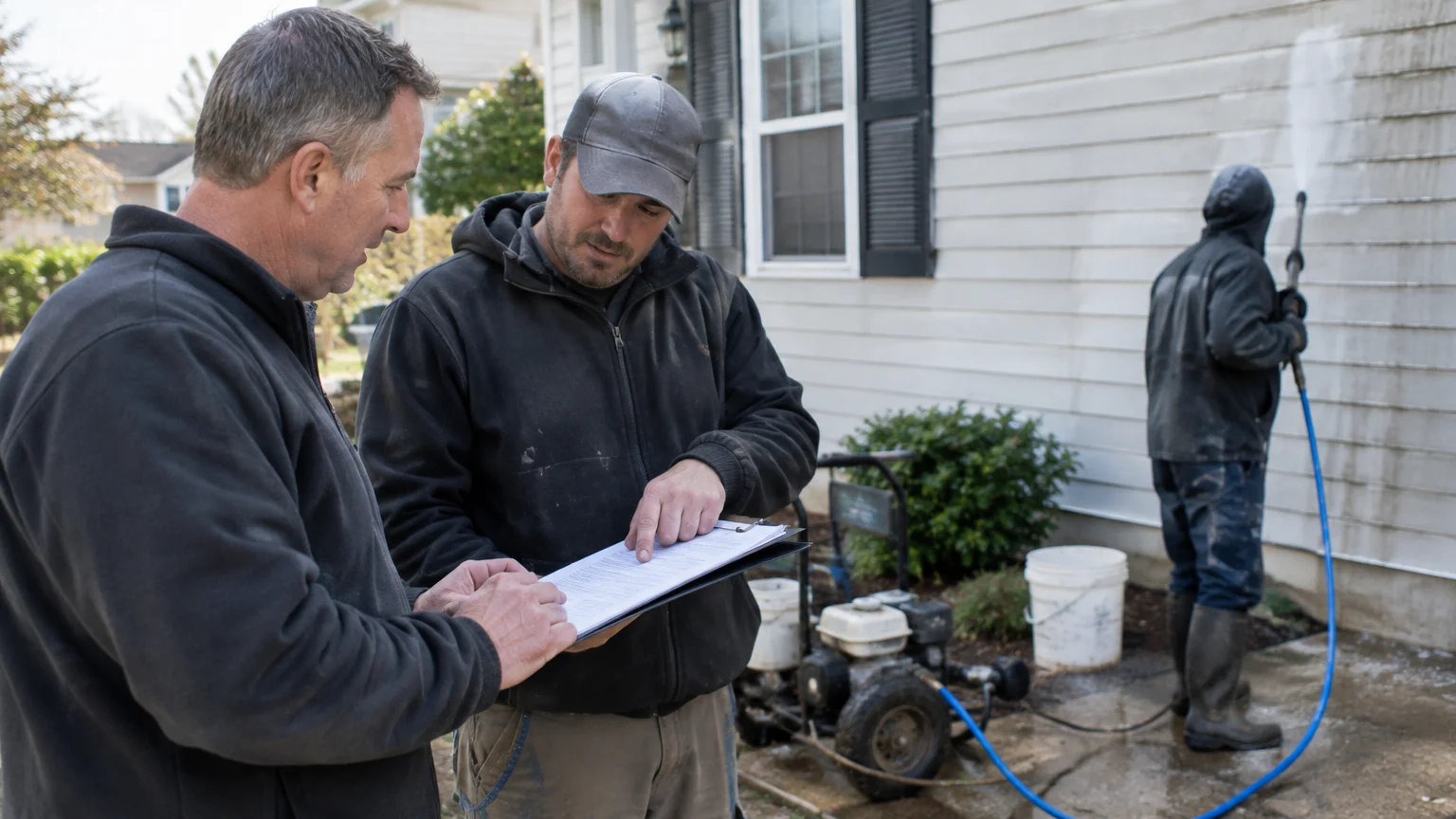
Soft washing uses low pressure and cleaning products to remove dirt and organic growth. It is often safer for delicate surfaces than strong spray. Pressure washing should not be aimed carelessly at loose trim, window seals, roof shingles, or old paint.
Gutter cleaning does not repair separated joints, sagging sections, damaged fascia, or buried drainage lines. Those issues need a separate review. Pressure Washing Slidell can help Slidell homeowners decide which service fits the property.
How do dirty or clogged gutters affect a home’s exterior?
Dirty or clogged gutters can send water toward siding, windows, doors, and the foundation. Early signs may include stains, peeling paint, damp soil, or water marks below the roofline. Quick attention can help limit damage and make later exterior cleaning easier.
Signs of overflow, staining, and water tracking
A home may show drainage trouble in several simple ways. Water marks below gutters often point to repeated overflow. Dark lines on siding may come from dirty runoff. Soil washed away near downspouts can show that water is leaving the system too fast or in the wrong place.
Property owners should also look for these signs:
- Gutters that sag, pull away, or hold standing water
- Water pouring over the front edge during rain
- Stains below downspouts or along foundation walls
- Peeling paint, soft wood, or damp areas near roof edges
- Plants or weeds growing inside the gutter channel
Some stains come from the roof, siding, or nearby trees instead of a clog alone. A careful check can help separate a cleaning need from a repair need. Gutters should not be used as a reason to spray delicate surfaces with strong pressure.
How neglected drainage can contribute to water damage
A clogged gutter has less room for rainwater to move. Overflow can wet fascia boards and trim again and again. Water may also collect beside the foundation, enter small cracks, or soak soil close to the home. The result depends on the roof design, soil, slope, gutter condition, and drainage layout.
Cleaning cannot reverse rotten wood, failed seals, foundation cracks, or interior leaks. Those concerns need the right repair professional. Gutter Cleaning Services can remove common blockages, while House Washing Services can clean dirty outside surfaces after the drainage path is checked.
What is the best order for gutter cleaning and house washing?
In many cases, gutter cleaning should come before house washing. Clearing gutters and downspouts first removes loose debris. It also helps stop dirty water from running over freshly cleaned walls. The final order still depends on the roofline, surface type, weather, and drainage condition.
Why gutter cleaning commonly comes before exterior washing
Gutter cleaning before washing gives leaves, sludge, and roof grit a place to leave the property. It also lets the technician check where water will flow during the exterior wash. If downspouts are blocked, the problem can be handled before clean siding receives more dirty runoff.
A final rinse around the gutters may happen after the house wash. This removes small pieces of loosened dirt from fascia and nearby trim. It also helps the crew check for streaks or missed areas. Property owners should ask what order will be used and why it suits the home.
When a property may need a different sequence
Some homes need another plan. A gutter may be too fragile to clean first, or a repair may need to happen before washing starts. A property with heavy roof growth, old paint, or hard-to-reach sections may need extra care and a slower process.
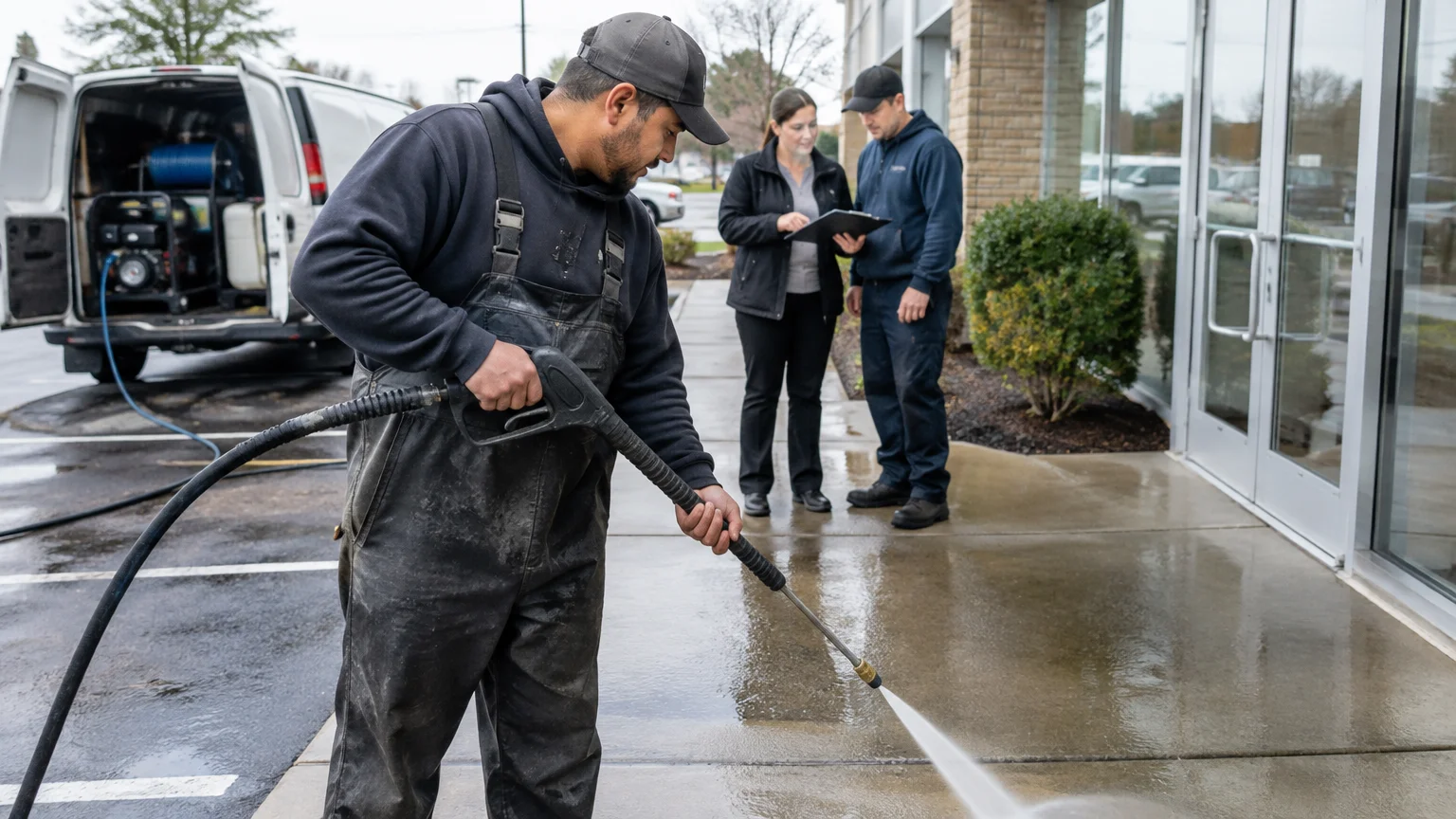
Commercial buildings may need a plan around doors, customers, deliveries, and work hours. Commercial Pressure Washing may be scheduled apart from gutter work when a building has broad walls, storefront glass, or large paved areas. The goal is to control runoff and protect people, plants, and surfaces.
How are gutters cleaned before or after power washing?
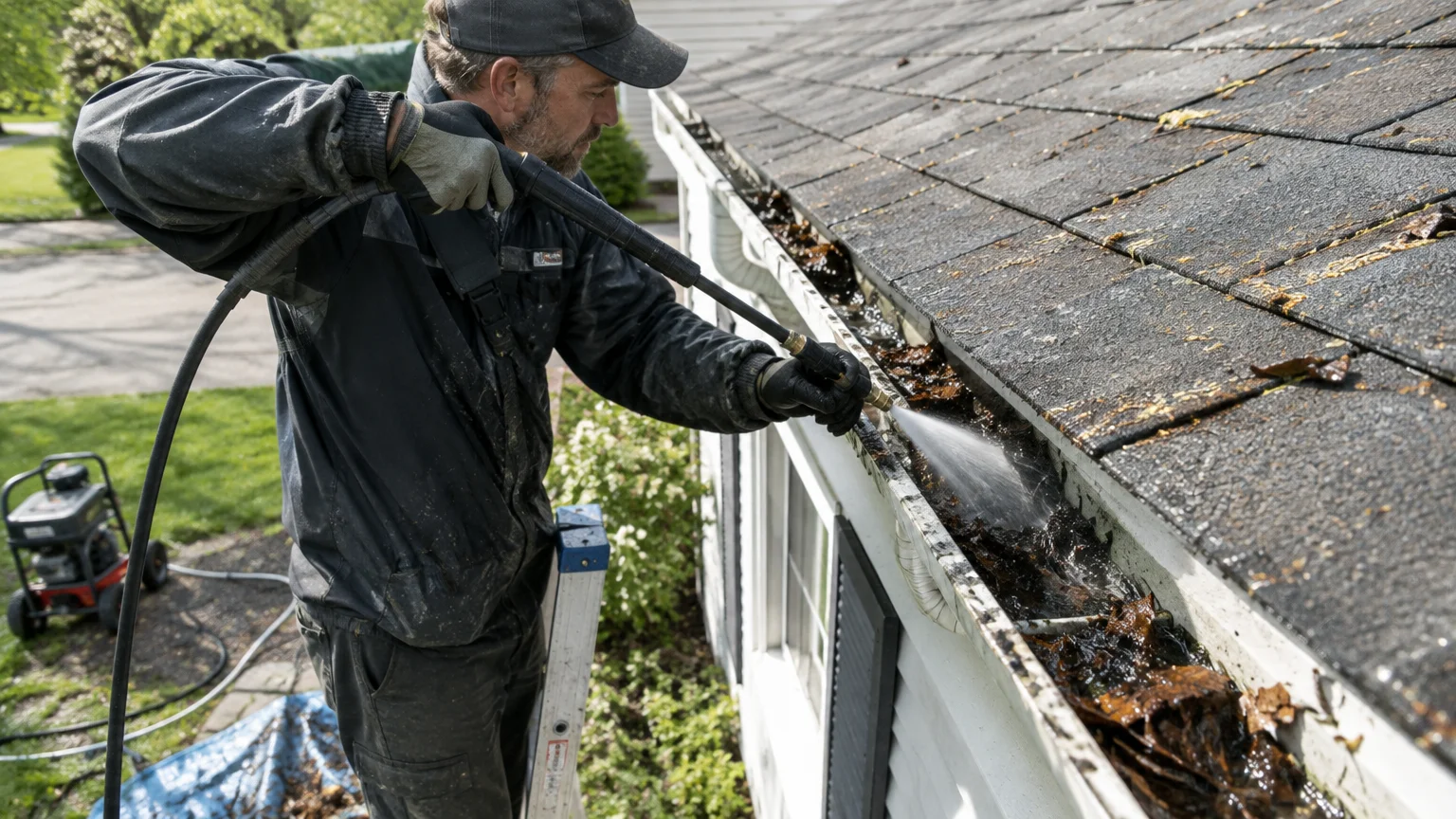
Gutters are commonly cleaned by hand, with simple tools, or with equipment chosen for the height and condition of the system. The work should remove leaves, sludge, and small blockages without harming the roof edge or gutter hangers. Downspouts should also be checked so water has a clear exit.
Common methods for removing leaves, sludge, and buildup
A basic cleaning may start with hand removal of dry leaves and twigs. A scoop can help lift wet sludge from the bottom of the channel. A hose may then flush the gutter and downspout when the system can safely handle the water flow.
Long-reach tools can help with some low and open gutters. Tall, steep, or fragile rooflines may need safer access and professional equipment. A homeowner does not need a professional for every check. From the ground, a homeowner can look for overflow marks and visible debris. Climbing a ladder becomes risky when the surface is wet, high, steep, or unstable.
Strong spray is not a cure for every gutter problem. It may push debris into a downspout or damage loose sections. It can also spread dirty water onto windows, walls, and plants. A careful method matches the tool to the gutter material and the debris inside it.
How professionals protect siding, landscaping, windows, and entryways
Good preparation helps keep the cleaning controlled. Plants may be watered first and covered when needed. Windows and doors should stay closed. Loose items, outdoor furniture, and decorations should be moved away from the work area.
Technicians should watch where water and debris travel. They may use lower pressure near siding, painted trim, screens, and seals. The exact method depends on the surface. Composite decking can often be cleaned, but the cleaner should follow the maker’s care advice and avoid damaging boards with excess pressure.
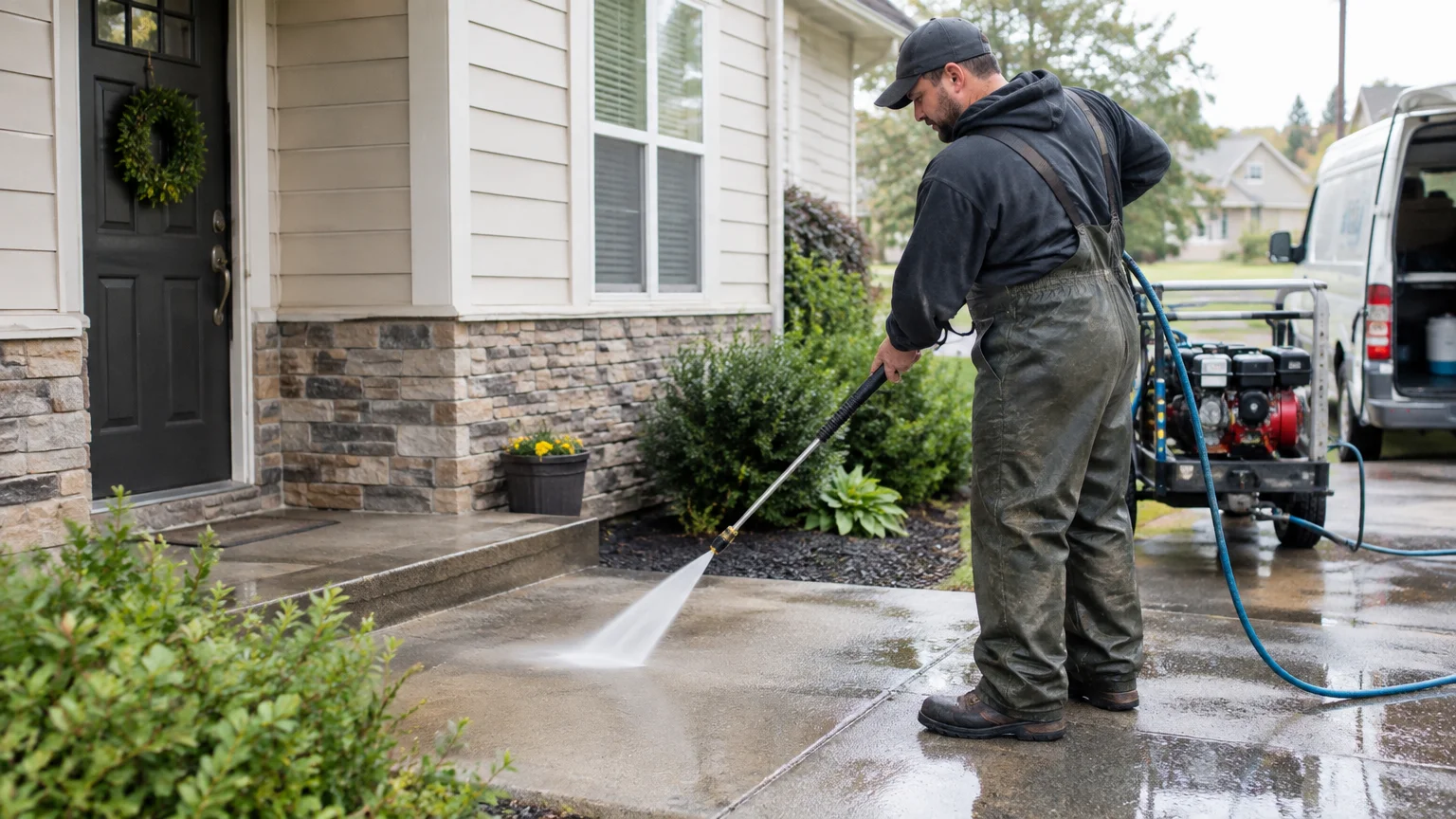
Other exterior cleaning tasks may need their own method. Driveway cleaning and concrete cleaning can often handle stronger pressure than siding, but the surface still needs care. Using one setting for every material can leave marks or cause damage.
Can gutter guards replace regular gutter cleaning?
Gutter guards can reduce the leaves and large debris that enter a gutter, but they do not remove every maintenance need. Small seeds, roof grit, pollen, and fine organic matter can still pass through or collect on top. Guarded gutters still need inspection and cleaning when water flow slows.
What gutter guards help prevent and what they cannot stop
A guard system may help keep large leaves and twigs out of the channel. This can reduce hand removal in some settings. It does not stop roof runoff from carrying fine dirt into the system. It also cannot repair a poor slope, loose hanger, damaged seam, or blocked underground outlet.
The right guard depends on the roof, trees, rain pattern, gutter shape, and local debris. No guard works well over a damaged or poorly draining gutter. Repairs and correct alignment should come before adding a cover.
How to inspect and maintain guarded gutters
Property owners can check guards from the ground after heavy rain. They should look for water spilling over, damp streaks, open gaps, or debris sitting across the guard. Downspouts should be watched for a steady flow instead of a weak trickle.
A roof edge is not a safe place for casual inspection. Anyone who cannot reach the area safely should leave the work to a trained professional. Pressure Washing Slidell can inspect gutter conditions for properties in the main Slidell area, from Olde Towne Slidell and Eden Isles to Pearl River, Lacombe, Pearl River, North Shore, and nearby communities. The review can help show whether cleaning, repairs, or guard upkeep should come first.
How often should gutters and house exteriors be cleaned?
There is no single schedule for every property. Gutter cleaning depends on nearby trees, roof design, storm exposure, gutter guards, and the amount of debris around the home. House washing depends on siding type, shade, moisture, traffic, dust, pollen, and visible buildup.
Factors that change a property’s cleaning schedule
Homes under pine trees or broad trees may collect debris faster than homes with open sky above the roof. Shaded walls may stay damp longer and show mildew sooner. Properties near busy roads may collect more dust and film on siding, windows, and trim.
Property owners should also consider the age and condition of the gutter system. Older gutters may have loose joints or weak hangers that need attention during cleaning. Multi-story homes and buildings with complex rooflines may need a more careful plan than small, simple homes.
House washing may fit well with seasonal property care, but the best time depends on weather and surface needs. Owners of rental homes, offices, and storefronts should watch for tenant complaints, slippery walkways, and visible runoff marks. Regular checks are more useful than waiting for a major overflow.
Warning signs that maintenance is overdue
Maintenance may be overdue when gutters overflow during normal rain, downspouts drain slowly, or dark lines spread below the roof edge. Other signs include plants growing in the channel, peeling trim, damp soil beside the foundation, and siding that looks streaked or green.
A simple ground check after rain can reveal much. Owners should look at corners, downspout outlets, and low points along the roofline. They should not climb onto the roof or use a ladder in unsafe conditions. Problems that return soon after cleaning may point to a slope, repair, or drainage issue.
What should property owners consider when combining these services?
Property owners should review the rooflines, gutter condition, drainage paths, exterior materials, access, plants, windows, and entryways before combining services. The best plan controls water from the roof through the downspouts and away from sensitive surfaces. It also separates cleaning from repairs that need another trade.
How to assess rooflines, drainage, exterior materials, and access
A property owner can begin with a ground-level walk around the building. Look for overflow stains, sagging gutters, blocked downspouts, soft trim, cracked caulk, and areas where water pools. Note the surface materials too. Vinyl siding, brick, stucco, painted wood, windows, and composite decking each need suitable care.
Access matters as well. Tall walls, steep roofs, narrow side yards, overhead lines, locked gates, and delicate landscaping can change the work plan. Businesses should also consider customers, employees, parking areas, and entry doors. A clear plan helps reduce mess and keeps the work area safer.
Property owners do not need a professional for simple ground checks or light upkeep when they can work safely. A professional is a better choice for high gutters, unstable ladders, electrical hazards, roof access, heavy blockages, or signs of structural damage.
Key takeaways
- Gutter cleaning often comes first so dirty runoff does not mark freshly washed walls.
- House washing and gutter care serve different needs, but both manage exterior dirt and water flow.
- Gutter guards reduce debris, yet they still need checks, cleaning, and repair review.
- Overflow, staining, and damp areas can signal blocked drainage or a larger repair concern.
- Safe access and surface care matter more than using the strongest spray or fastest method.
A well-planned service can make gutter care and exterior washing work as one maintenance task. Pressure Washing Slidell helps property owners review gutters, drainage paths, and outside surfaces. Contact us to plan the right cleaning service for your property.
Frequently Asked Questions
Should gutters be cleaned before or after house washing?
Gutters are usually cleaned before house washing. This clears leaves and sludge before water runs across the exterior. It also lets the crew check downspouts before washing begins. A final rinse may follow the house wash to remove loose debris from fascia, trim, and nearby surfaces.
Can pressure washing damage gutters or siding?
Yes, strong pressure can damage loose gutters, painted trim, siding, screens, seals, and delicate surfaces. The right method depends on the material and its condition. Gutter cleaning power washing should not mean using high pressure everywhere. Careful pressure and controlled water flow are safer choices.
How often should a homeowner clean rain gutters?
A homeowner should check gutters after major storms and during seasons when leaves and seeds fall. Homes near trees may need attention more often than open lots. Overflow, slow downspouts, plants in the channel, and dark stains below the roofline show that cleaning may be overdue.
Do gutter guards stop all clogs?
No. Gutter guards can block many large leaves and twigs, but fine debris may still collect on top or pass through. Roof grit, seeds, pollen, and moss can affect water flow. Guarded gutters still need inspections, downspout checks, and cleaning when drainage becomes slow.
What should a homeowner do about gutter stains on siding?
First, the homeowner should check whether gutters overflow or leak during rain. The cause may be a clog, loose joint, poor slope, or roof runoff. Once drainage is corrected, the siding can be cleaned with a method suited to its material. Persistent stains may need a repair review.
If you are unsure what you are dealing with, have the area checked before it becomes a larger problem. Contact us today to discuss the right service with Pressure Washing Slidell.