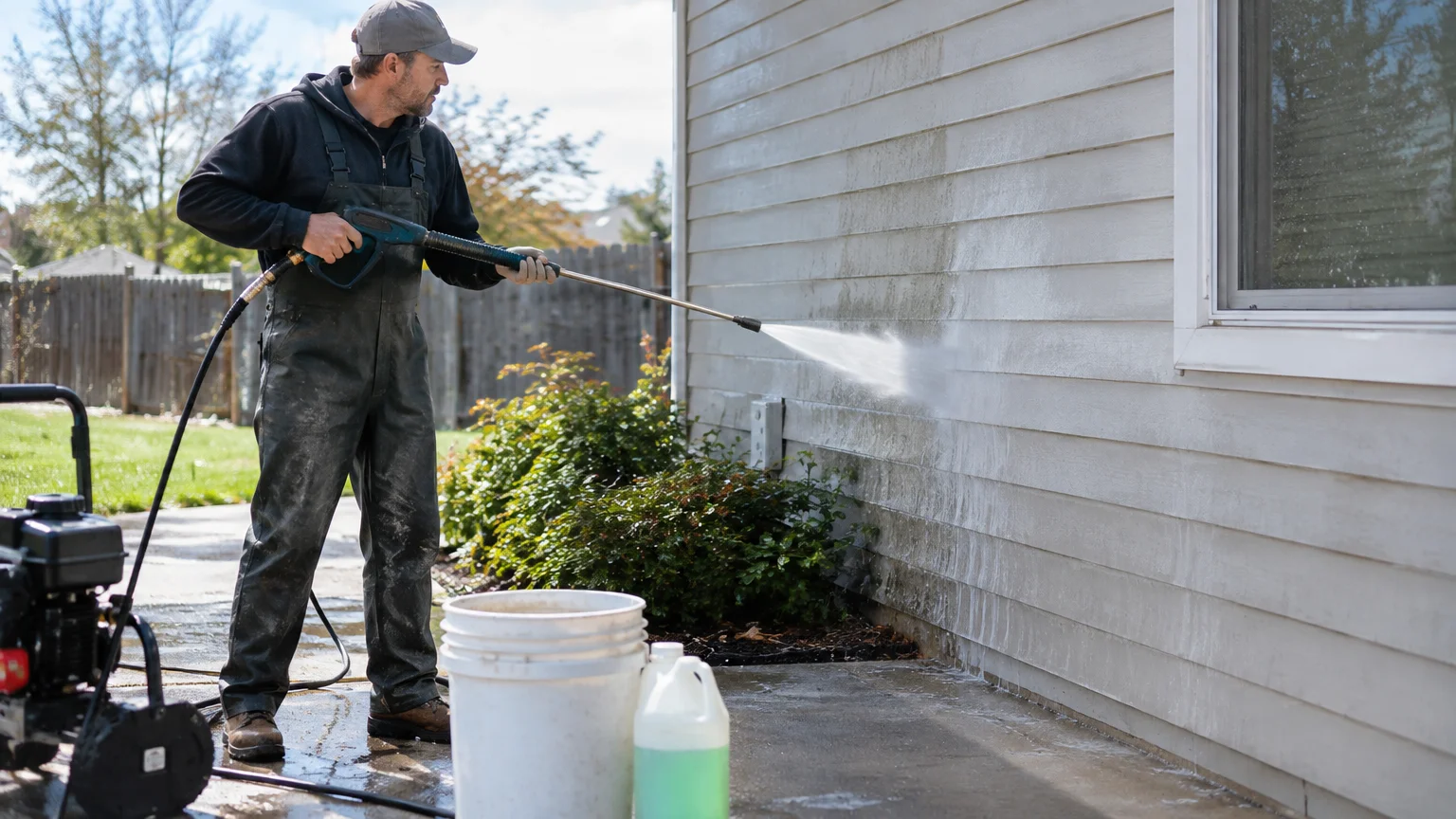
Pressure washing detergent helps loosen dirt, oil, mildew, and other soil before rinsing. The right dwell time and water pressure depend on the surface and stain. A good mix can clean better than stronger pressure alone. This helps protect siding, concrete, wood, brick, and other exterior materials.
A clean surface can change the look of a home or business. Cleaning is not only about using the strongest spray. Water pressure, heat, detergent, nozzle choice, distance, and rinse speed all affect the result. A trained cleaner checks the full job before work begins.
Pressure Washing Slidell helps property owners understand which method fits each surface. This matters for homes, stores, rentals, offices, patios, driveways, and shared buildings in the Slidell area. The same stain may need a different plan on concrete than on painted siding. Pressure Washing Slidell serves local properties near Olde Towne Slidell, Eden Isles, Pearl River, Lacombe, North Shore, and nearby communities.
What does pressure washing detergent do?
Pressure washing detergent helps break the bond between soil and the surface below. It can loosen grease, food marks, mildew, algae, pollen, and built-up grime. Water can then carry away more debris without using extreme force.
Detergent is not the same as regular household soap. Professional cleaners choose products based on the soil and material. They also follow the product label, protect nearby plants, and control where dirty water flows.
How detergent breaks down different types of soil
Different soils respond to different cleaning steps. Oil and grease may need a cleaner that breaks down oily residue. Organic growth, such as algae or mildew, may need treatment that removes the growth and its surface film. Loose dust and pollen may need only water and a light rinse.
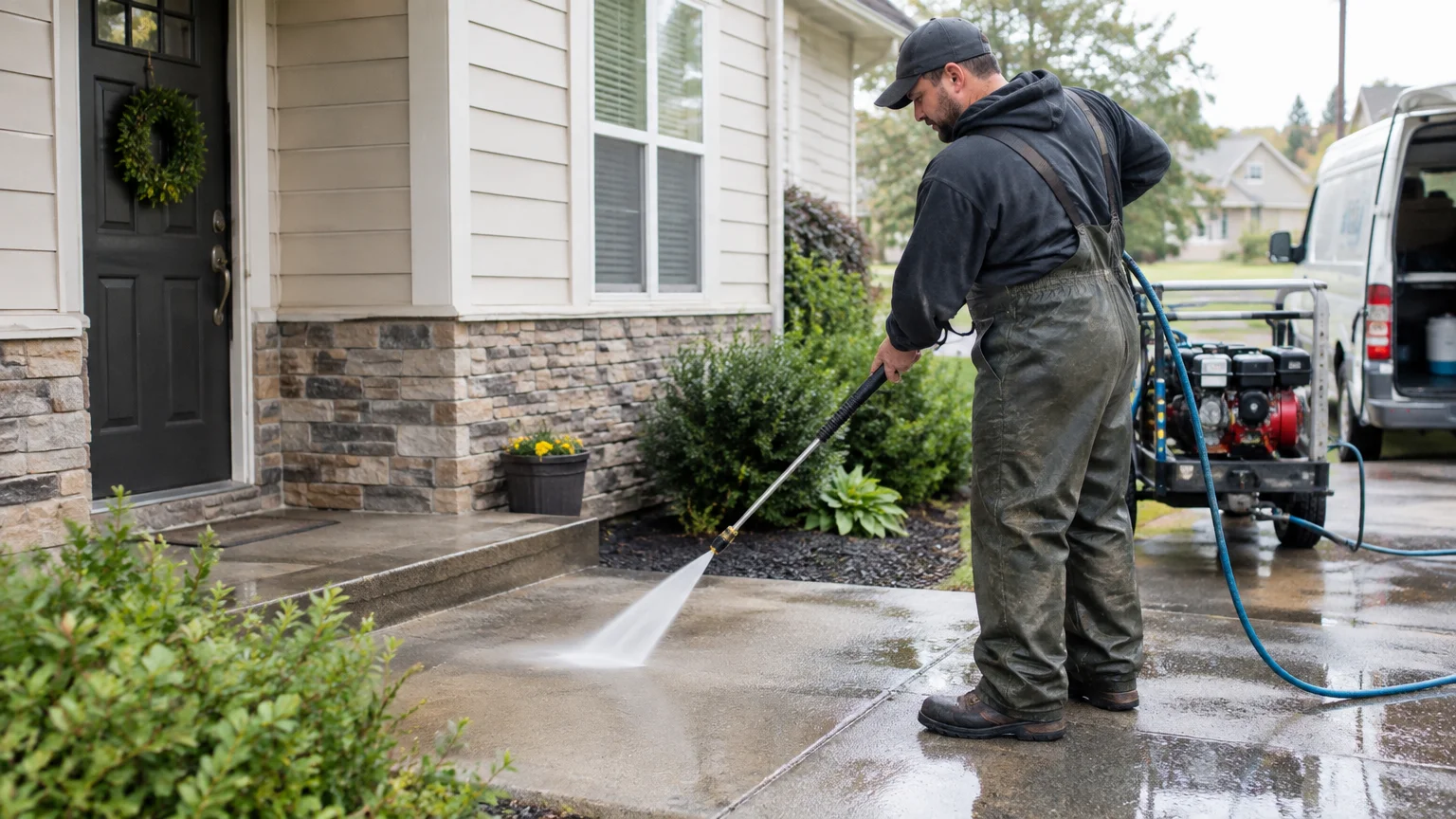
Concrete cleaning often needs a different plan than house washing. A driveway may hold oil deep in its pores. Painted siding may have only dust and green growth on its outer face. Brick can hold dirt in its joints, while wood can absorb water and cleaning products. The cleaner must match the method to the material.
A test area can help before the full wash begins. It shows how the surface reacts to the product and spray. It may also reveal faded paint, weak mortar, old sealant, or stains that will not fully disappear.
Why dwell time matters before rinsing
Dwell time is the short period a cleaning product stays wet before rinsing. This gives the product time to work. If it dries too soon, it may leave residue or fail to loosen soil. If it stays too long in strong sun, it may harm plants, paint, or nearby materials.
Professionals watch the surface during this step. They may work in smaller areas, add light moisture, or change the application method. The goal is controlled cleaning, not waiting as long as possible. Good results come from enough contact time, careful rinsing, and steady checks.
When should professionals use detergent instead of more pressure?
Professionals should use detergent when soil is bonded to a surface or when extra pressure could cause harm. More pressure may remove dirt, but it can also strip paint, mark wood, damage mortar, or force water behind siding. Detergent can reduce the need for aggressive spray force.
Pressure should match the surface, not just the stain. A tough stain on a delicate surface still needs a gentle method. A strong surface may handle more pressure, but the cleaner must control the nozzle, distance, and spray pattern.
Matching cleaning chemistry to the surface
Soft washing uses cleaning products with low pressure to clean delicate materials. It often works well for siding, roofs, painted surfaces, algae, and mildew. Pressure washing may suit strong materials such as concrete, but the pressure must still fit the slab and its condition.
Composite decking also needs care. It may tolerate cleaning, but high pressure held too close can leave marks or remove the finish. A professional may use a mild product, a wide spray, and a careful rinse. Wood decking needs more care because water can raise the grain or enter damaged spots.
Brick Cleaning Services can help with dirt, organic growth, efflorescence, and other marks. Efflorescence is a white, powdery deposit caused by salts moving through masonry. It may need a different method than normal surface dirt.
How excessive pressure can cause damage
Excessive pressure can cut into soft wood, chip paint, loosen mortar, and damage caulk. It can also drive water into wall gaps, vents, or openings. Damage may not show until later, so safe technique matters from the start.
Homeowners should avoid aiming a narrow spray at windows, electrical parts, roof edges, or damaged siding. They should also avoid using a high-pressure wand from a ladder. The force can affect balance and cause a serious fall.
Pressure Washing Slidell can help Slidell homeowners decide if a surface needs pressure washing, soft washing, or another method. A local review helps when the material is old, fragile, painted, cracked, or hard to identify.
How do professionals compare chemical dwell time with mechanical pressure?
Professionals compare dwell time and mechanical pressure by asking which choice removes soil with less risk. They first identify the material, check its condition, and study the stain. Then they choose a product, spray strength, nozzle, and rinse plan.
The best method is rarely the strongest one. A cleaner may use more dwell time and less pressure on delicate siding. On sound concrete, the cleaner may use a stronger rinse after applying the right product. The aim is a clean surface that still looks and works as it should.
A practical decision process for common surfaces
A professional may use this process:
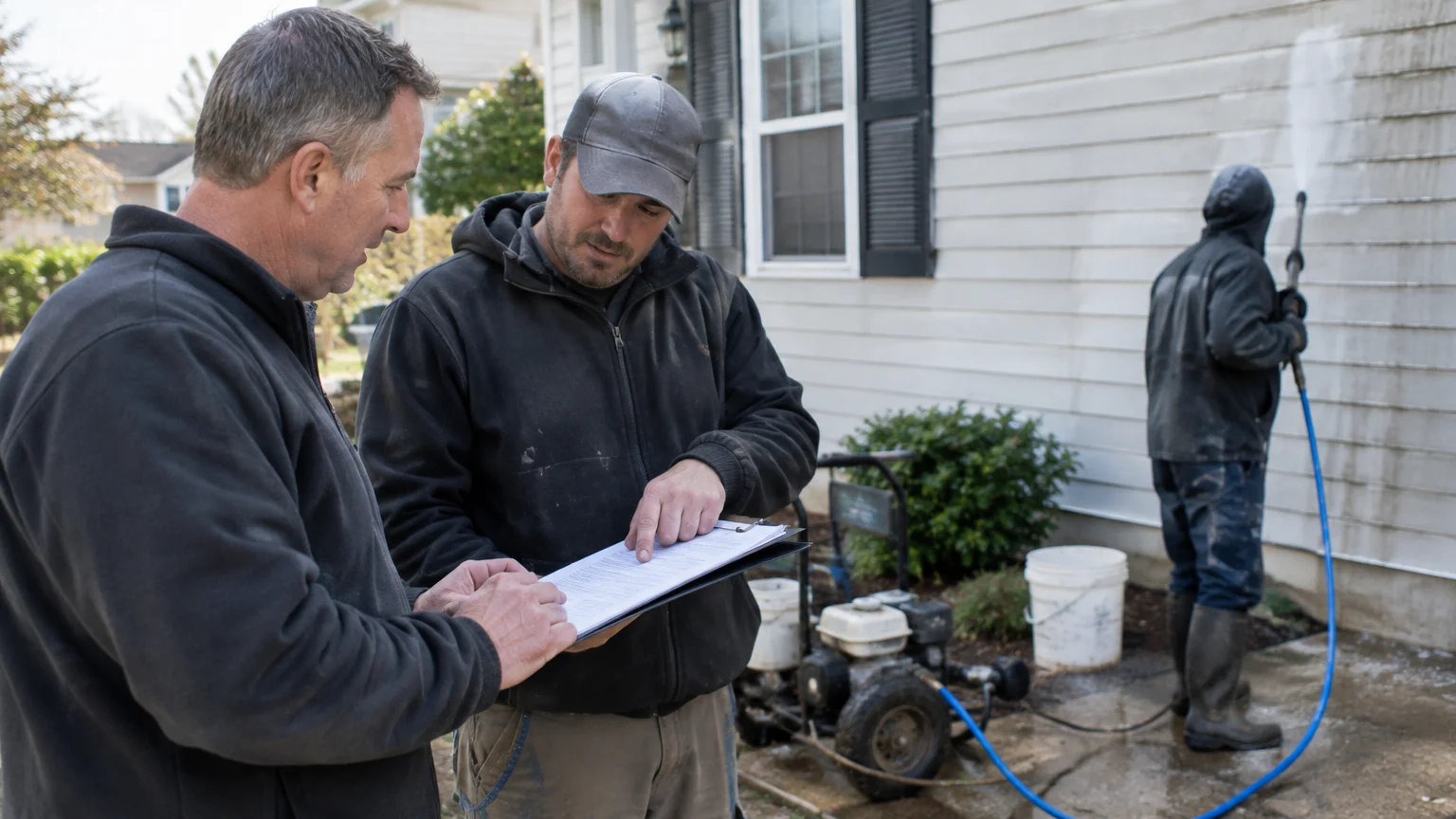
- Inspect the surface for cracks, loose paint, weak joints, stains, and nearby risks.
- Identify the soil, such as oil, mildew, algae, mud, pollen, or loose dust.
- Test a small area with the planned product and spray strength.
- Allow suitable dwell time while keeping the area wet and controlled.
- Rinse from a safe distance, then check the result before repeating.
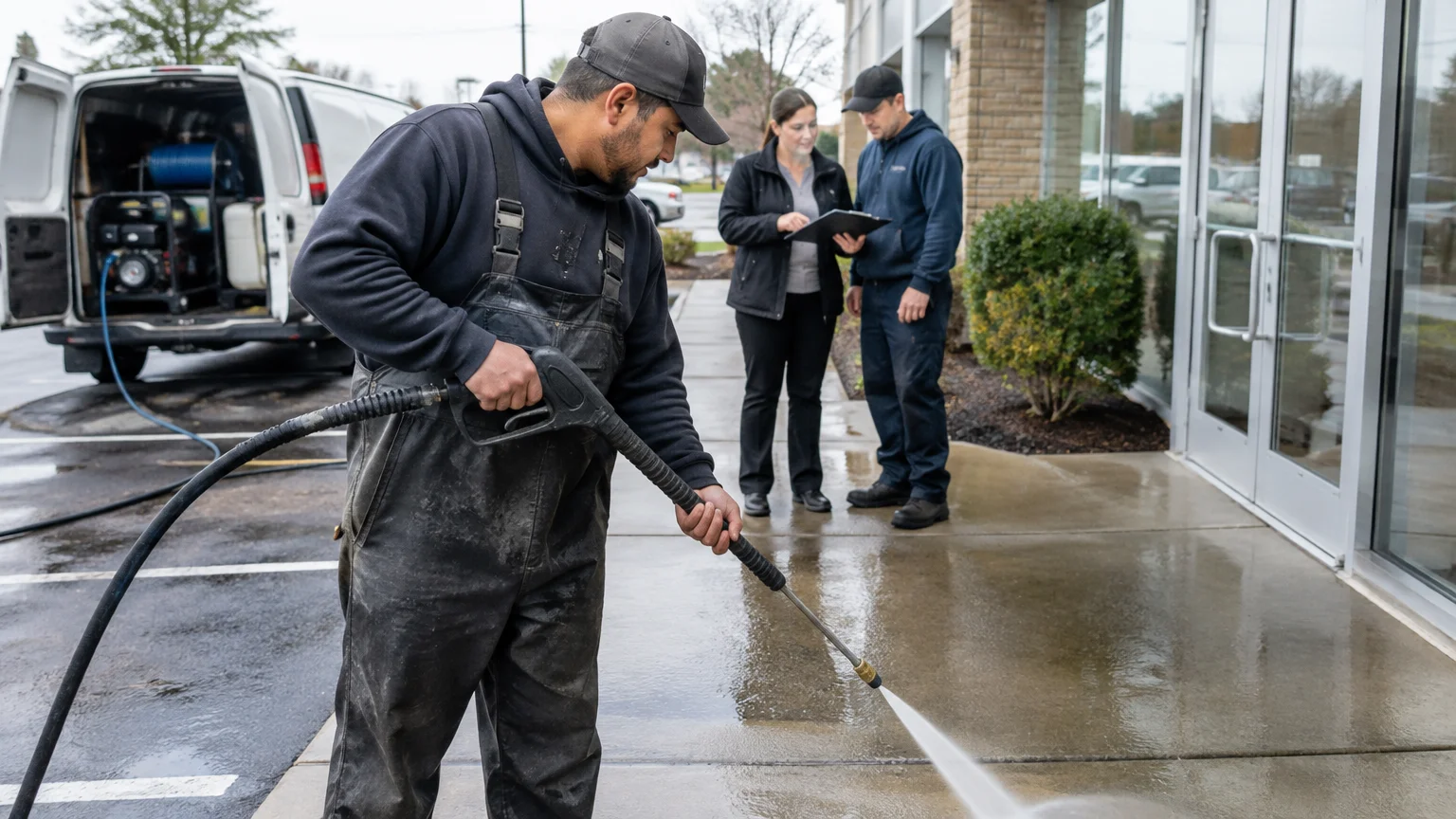
For a concrete driveway, the plan may focus on oil removal and even rinsing. For house siding, it may focus on low pressure and careful detergent use. For a hotel or other commercial building, the plan must also consider entrances, guests, signs, landscaping, and public paths.
Building Washing Services and Commercial Pressure Washing often need extra planning. A business owner or property manager may need work completed without blocking doors or making paths slippery. Clear communication and runoff control matter as much as the spray itself.
When rinsing technique matters as much as application
Rinsing removes loosened soil and leftover product. A weak or uneven rinse can leave streaks, spots, or residue. It may also move dirty water onto a clean area.
Professionals rinse in a planned direction. They protect openings, watch low points, and keep checking the surface. They may use a wider spray for an even finish. On large areas, they work in sections so the product does not dry before rinsing.
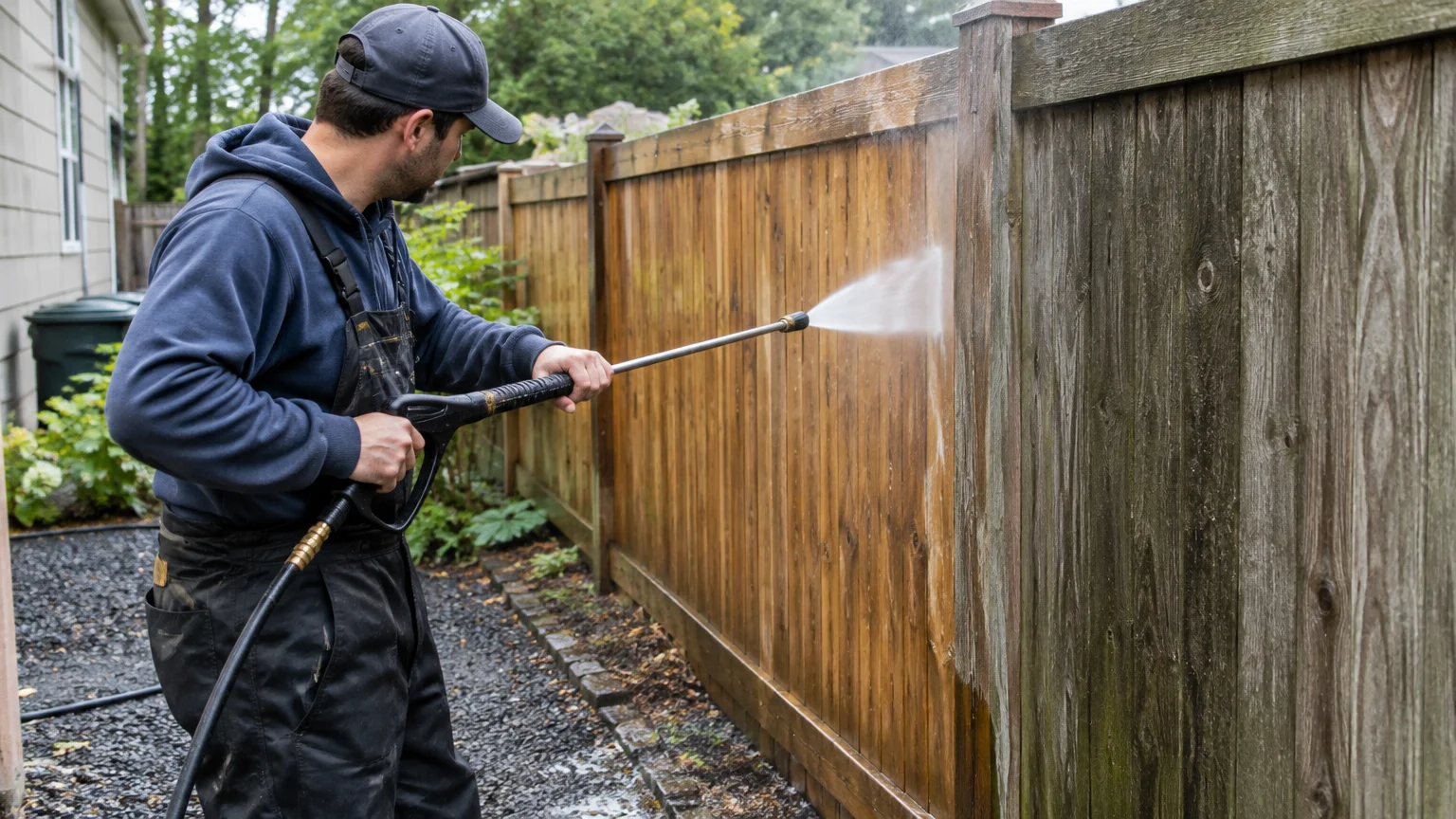
This approach also helps with patio cleaning, pool deck cleaning service work, fence cleaning services, and deck cleaning services. Each surface has its own risks. A fence may have soft wood and plants nearby, while a pool deck may need extra care around drains and walking areas.
When is DIY pressure washing no longer sensible?
DIY pressure washing can make sense for simple upkeep on a sound, small surface. A homeowner may rinse loose dirt from a sturdy walkway, clean outdoor furniture with the proper setting, or wash a small patio after reading the equipment instructions. The task should stop when the surface, equipment, or runoff creates a real risk.
Professional help makes sense when the material is delicate, the stain is stubborn, or the area is large and hard to control. It is also wise when work involves heights, electrical parts, roof surfaces, strong products, or public access. Homeowners do not need a professional for every light cleaning task, but they should know when the risks change.
Signs that a surface needs professional assessment
A homeowner should consider an assessment when:
- The surface has peeling paint, cracks, loose mortar, soft wood, or damaged sealant.
- Water may enter siding, windows, vents, doors, or electrical equipment.
- The stain returns quickly or appears deep inside concrete, brick, or wood.
- The work requires a ladder, roof access, strong chemicals, or traffic control.
- Runoff could reach landscaping, storm drains, neighbors, pets, or public paths.
A professional can also help when the material is hard to identify. Using the wrong product on stone, composite boards, painted metal, or masonry may leave lasting marks.
How professionals balance safety, runoff, and results
Safe cleaning includes more than choosing a spray setting. Professionals protect plants, cover sensitive items, manage hoses, and keep people away from wet areas. They also plan where dirty water will go and avoid sending chemicals or soil into harmful places.
Homeowners can handle basic checks and light cleaning when conditions are safe. They should follow the equipment manual, wear suitable protection, keep children and pets away, and never mix cleaning products. They should stop if the surface changes color, the spray causes damage, or the equipment feels hard to control.
For property owners, Pressure Washing Slidell can review the surface and explain which method fits. The right plan may include pressure washing, soft washing, concrete cleaning, brick cleaning, or building washing. The material and soil decide the best choice. Pressure washing costs also depend on the size, access, surface condition, and work needed, with the final cost confirmed on a quote.
Key takeaways
- Pressure washing detergent loosens soil so less force may be needed.
- Dwell time gives the product time to work before rinsing.
- Pressure should match the surface and its condition, not only the stain.
- Low-pressure cleaning may be safer for siding, roofs, paint, wood, and other delicate materials.
- DIY cleaning is fine for simple upkeep, but damaged, tall, delicate, or risky work needs careful review.
Frequently Asked Questions
Does pressure washing detergent remove oil from a concrete driveway?
It can help loosen surface oil, but results depend on the stain’s age, depth, and size. Concrete is porous, so some oil may remain after cleaning. A professional may test a small area first and choose a product and rinse method suited to the driveway.
What pressure washer setting is safe for house siding?
There is no single safe setting for every siding type or condition. Vinyl, painted wood, fiber cement, and older siding may need different care. A wider spray, greater distance, and low-pressure cleaning often lower the risk. The surface should be tested before full washing.
Can composite decking be pressure washed?
Composite decking can often be cleaned, but high pressure may mark the boards or harm the finish. The cleaner should follow product instructions, use a suitable spray pattern, and keep a safe distance. A small test area can show if the planned method is suitable.
How often should a home or hotel be pressure washed?
The right schedule depends on weather, shade, traffic, nearby trees, surface type, and visible soil. Homes may need cleaning when buildup affects appearance or safety. Hotels and other busy properties may need a planned maintenance review because entrances and walkways receive more use.
Conclusion
Chemical dwell time and mechanical pressure serve different purposes. Detergent helps loosen soil, while pressure helps rinse it away. Professionals compare both before choosing a method and adjust the plan for each surface.
A careful approach can help protect a home, business, deck, driveway, fence, or masonry surface in Slidell. Contact us to discuss the right cleaning method with Pressure Washing Slidell.