A pressure washing surface cleaner is best for broad, level areas such as sound concrete driveways, patios, sidewalks, and pool decks. A wand is better for edges, steps, walls, corners, and delicate spots. The safest choice depends on the material, surface condition, stain, water flow, and cleaning method.
Table of Contents
- What is a pressure washing surface cleaner?
- Why do professionals use a surface cleaner on flat surfaces?
- When is a pressure washing wand the better choice?
- What is the difference between a surface cleaner and a wand?
- Can a surface cleaner remove every type of stain?
- How do you choose the right pressure washing equipment?
- When should you hire a professional instead of using a pressure washer?
- Key takeaways
- Frequently Asked Questions
- Conclusion
What is a pressure washing surface cleaner?
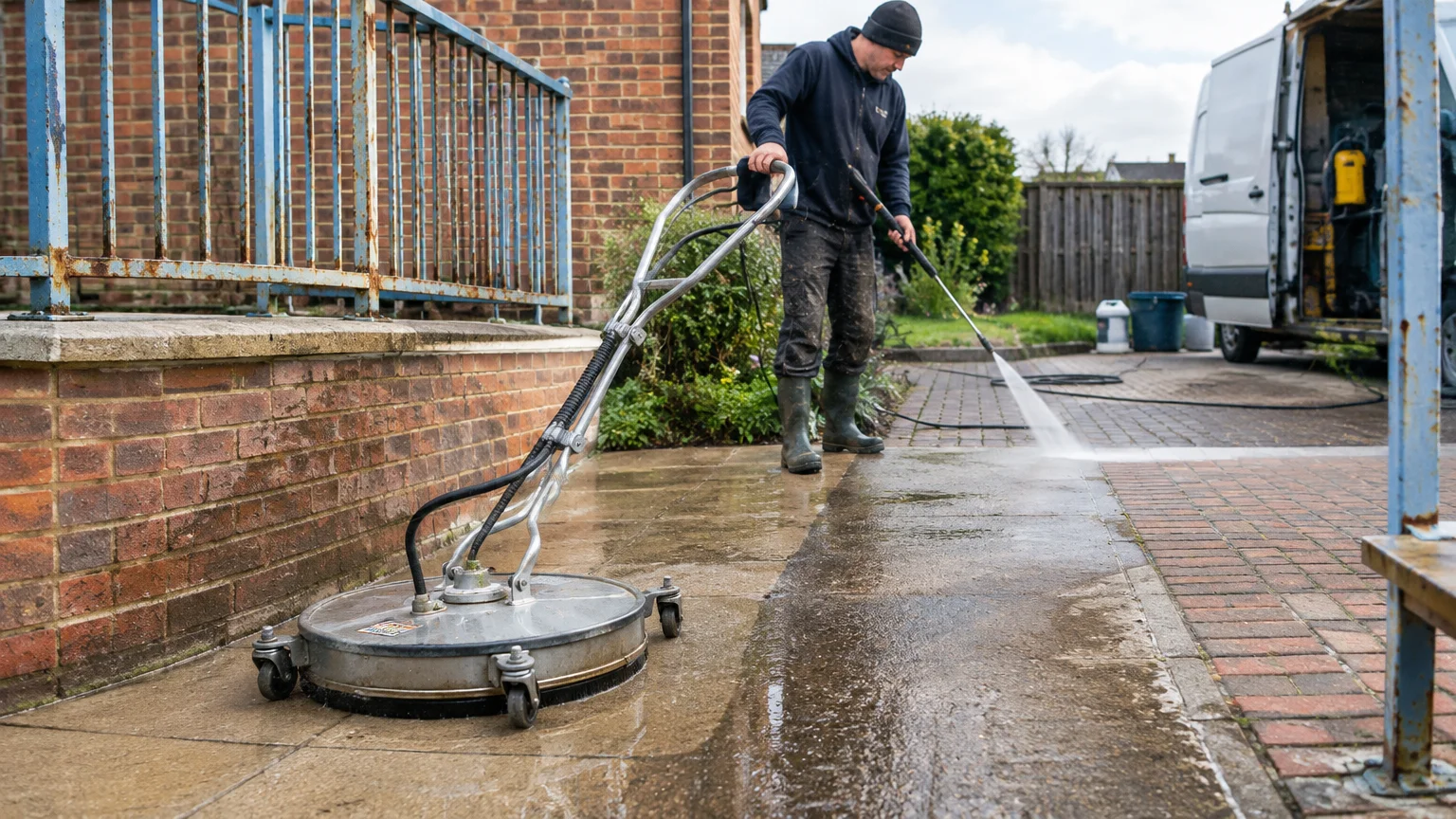
A pressure washing surface cleaner is an attachment for wide, flat areas. It has a round cover over a spinning bar. Small spray tips sit on the bar and turn as water moves through them. This lets the tool clean a wider path than one open wand tip.
The cover helps keep spray and dirty water close to the ground. This can make cleaning neater near homes, shops, and walkways. It also helps the operator move at an even speed. A steady speed matters because a wand held in one place can leave a bright mark.
How the rotating spray bar cleans flat surfaces
The spray bar turns below the cover while pressurized water leaves the tips. Each tip cleans part of the path. As the operator moves the tool, the paths overlap and create a more even area.
The tool does not treat every stain in the same way. It gives water a steady pattern and even coverage. Loose soil may lift with water alone. Oil, algae, rust, and other stains may need a cleaner or another method.
A surface cleaner is not a magic tool. It still needs the right water flow, tip size, pressure, and speed. Moving too fast can leave dirt behind. Holding the tool still can mark the surface.
Which surfaces are suitable for a surface cleaner?
A surface cleaner works best on sound, fairly level areas. These include concrete driveways, concrete sidewalks, patios, and some pool decks. It may also work on certain pavers after a small test area.
Wood, old coatings, soft stone, painted areas, and weak concrete need more care. A round cleaner may not suit uneven boards or loose material. The operator should inspect the area before starting.
In Slidell, a homeowner may use this tool for a small patio. A larger property may need a planned cleaning process. Pressure Washing Slidell helps Slidell property owners match the tool to the surface and its condition.
Why do professionals use a surface cleaner on flat surfaces?
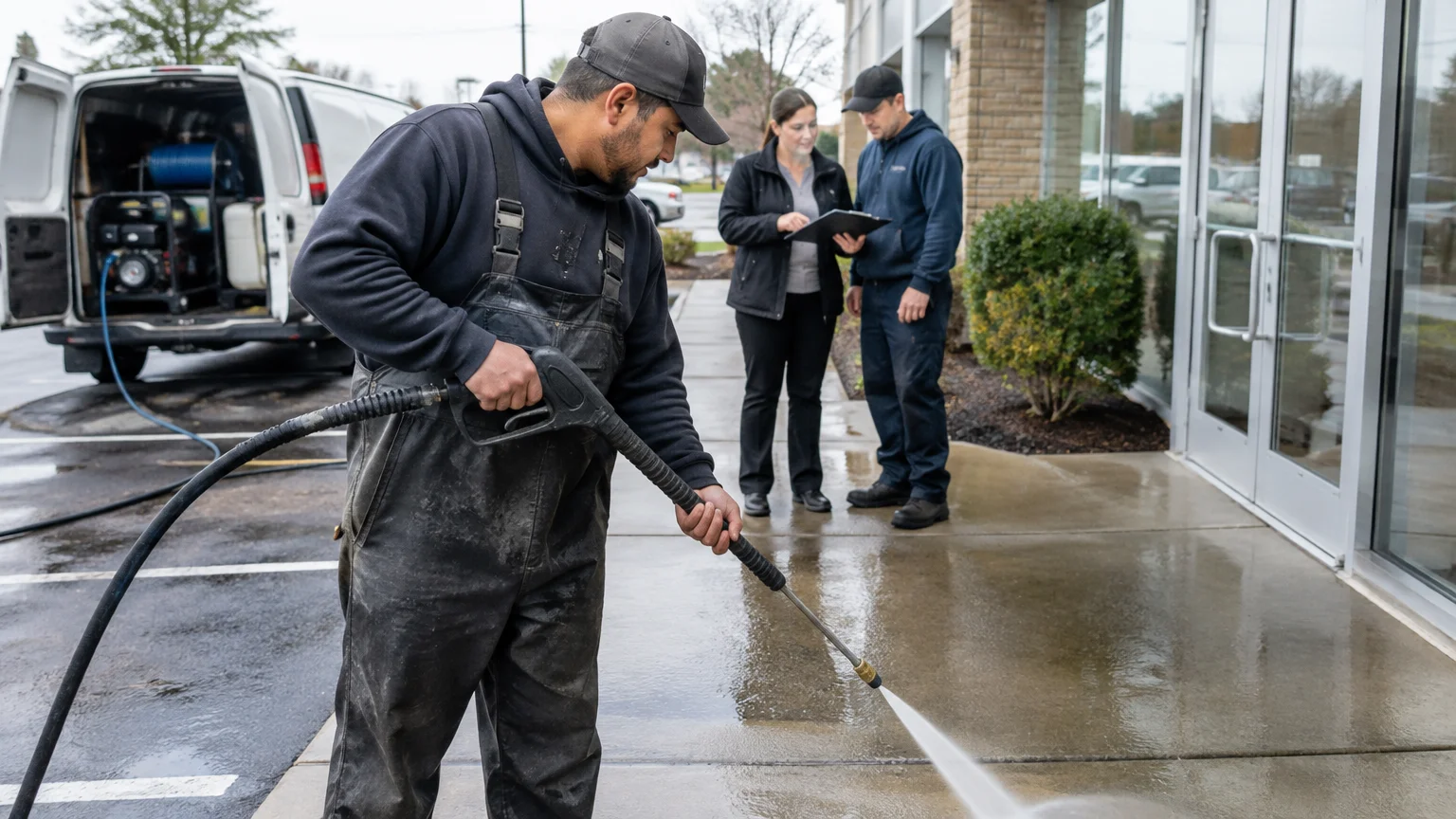
Professionals use a surface cleaner because it can make wide, flat areas more even. The rotating bar covers a set path. The housing helps limit spray spread. This often makes it a better choice for large concrete areas than a wand alone.
A wand can clean a driveway, but the result depends on many small movements. The operator must keep the tip at a similar height, angle, distance, and speed. Small changes can create light and dark bands. A surface cleaner reduces some of these changes.
The tool can also help reduce strain during a long job. A professional still watches the surface, hoses, runoff, and nearby items. Less strain can make it easier to keep the pattern steady.
How it improves cleaning consistency
Consistency means each part of the surface gets a similar cleaning pass. The round housing keeps the tips at a set distance from the ground. The spinning bar spreads the spray across the cleaning path.
This does not remove the need for skill. Concrete may have cracks, repairs, slopes, and uneven soil. The operator may need to slow down, overlap passes, or use a wand in tight places. Good results come from the tool and method working together.
For a driveway or patio, the operator may first clear loose debris. The area may then receive a rinse or treatment. The surface cleaner can handle the open field, while the wand reaches steps and borders.
How it helps reduce streaks and visible lines
Visible lines often come from uneven wand movement. They may also come from dirty water drying at different rates. A surface cleaner can reduce these marks by keeping its spray pattern more even.
The operator still needs to keep moving. Passes should overlap in a controlled way. Edges may need a separate rinse so the center and border look more alike.
The tool is useful where a driveway or patio has a broad, open area. It is less useful around posts, steps, drains, and tight corners. A wand can finish those places with better control.
When is a pressure washing wand the better choice?
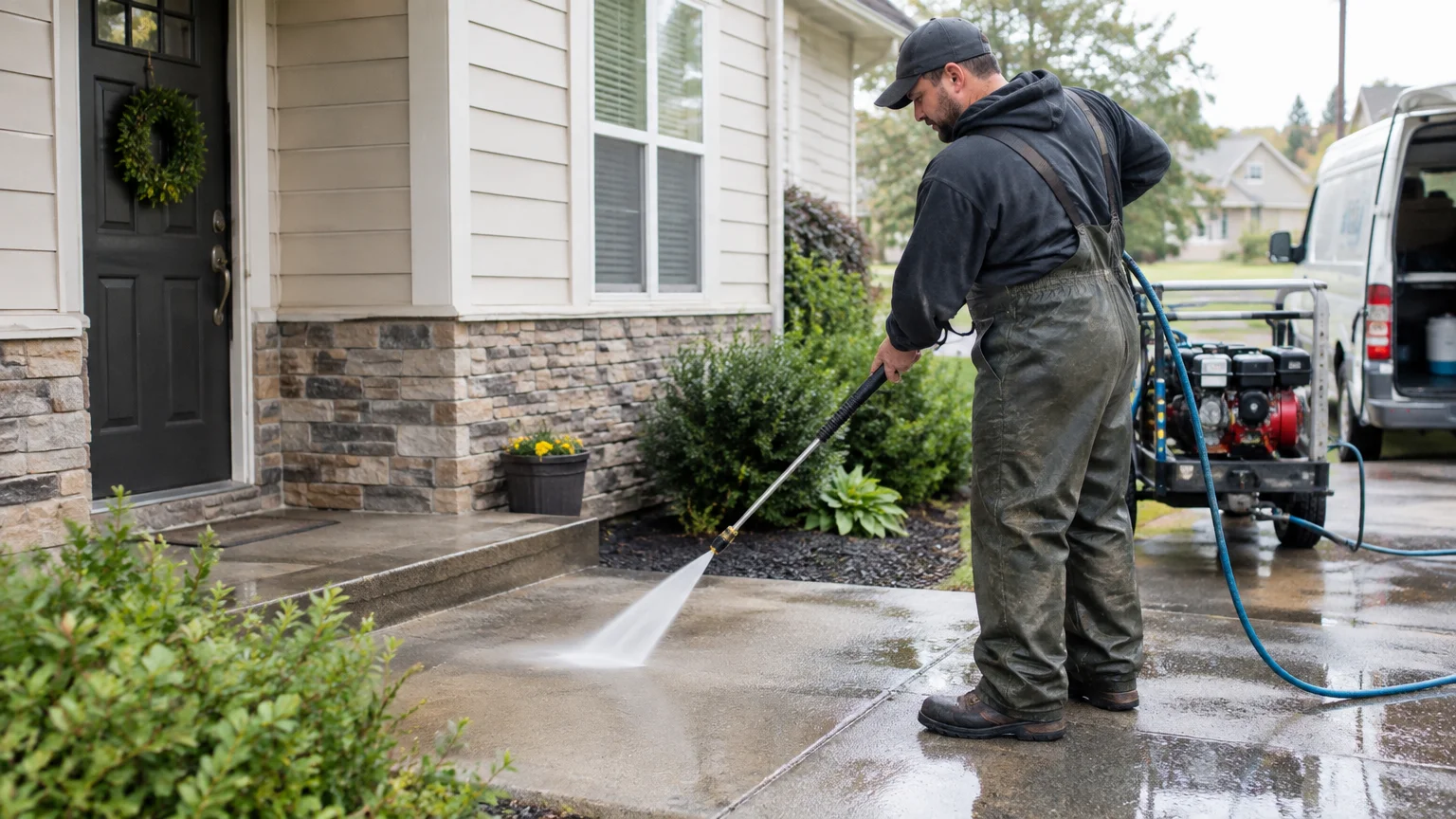
A pressure washing wand is often better for edges, corners, narrow gaps, walls, steps, and odd shapes. It gives the operator a small, direct spray area. That control helps when a round attachment cannot sit flat or move freely.
A wand is also useful for rinsing after detergent loosens soil. It can reach below railings and around outdoor fixtures. With the right tip and method, it can clean places that need a light touch.
A wand does not always mean stronger cleaning. A narrow tip focuses water in a small area. This may harm paint, wood, mortar, or old concrete. The operator must choose the angle and distance with care.
How a wand handles edges, corners, and narrow areas
A flat attachment may not reach the last inch beside a wall or curb. A wand can direct water along that edge. It can also work around steps, posts, gates, drains, and raised sections.
The operator should not force water into siding gaps, door seals, vents, or cracks. Water can move behind materials when the spray points the wrong way. Slow movement and a wider spray can often be safer than a tight jet.
For a small patio with plants or furniture, a wand may offer better control. Loose items should still be moved first. Nearby doors and openings should be protected before rinsing begins.
Why a wand works better for vertical and irregular surfaces
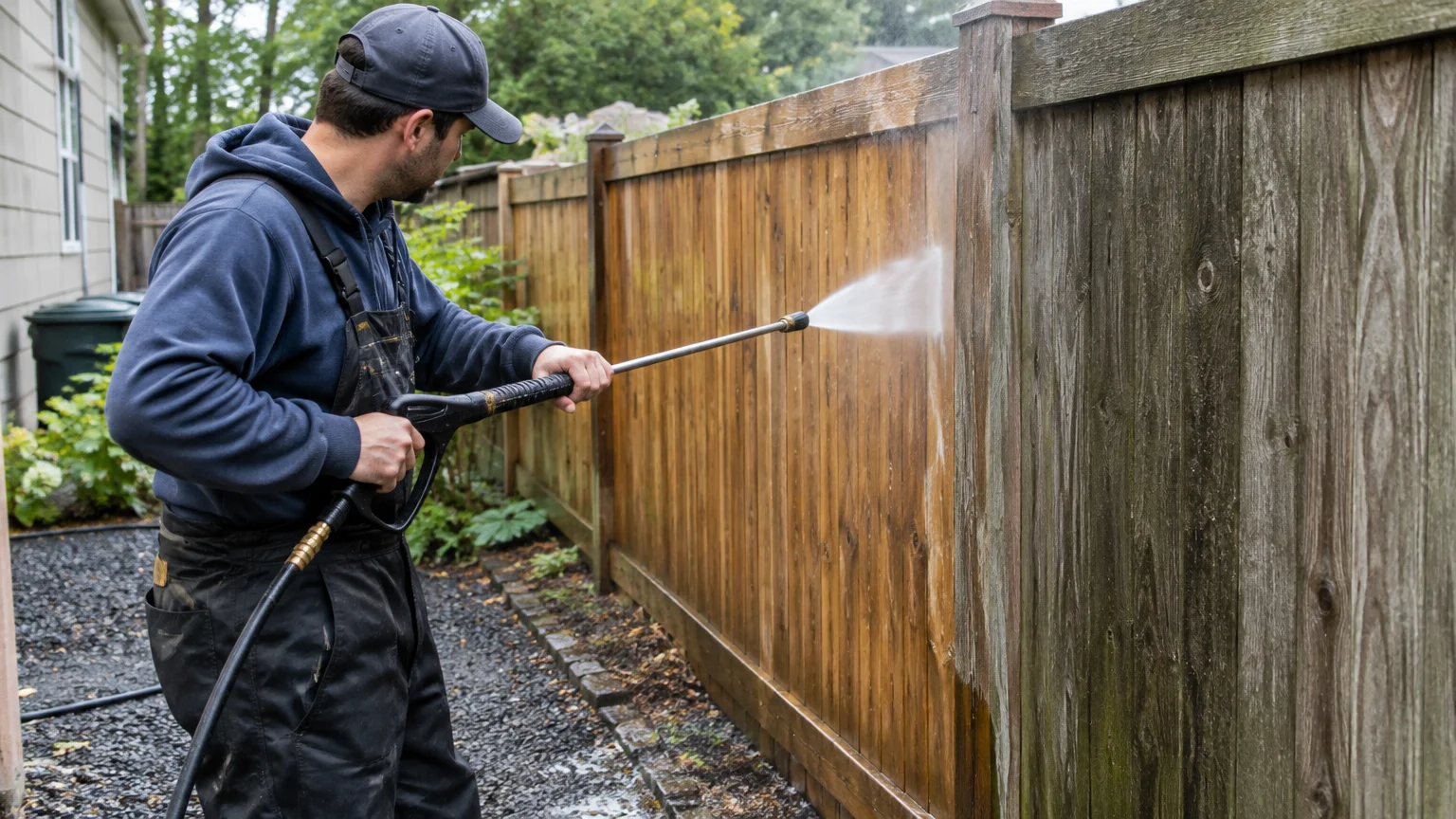
A surface cleaner needs a fairly level area beneath its housing. A wall, fence, or house siding does not provide that support. A wand can follow a vertical surface while the operator keeps the spray at a safer angle.
Vertical cleaning may need a low-pressure method instead. Vinyl siding, painted wood, and delicate trim can suffer from too much force. Soft Washing Services may work better when algae or organic growth is the main issue.
A wand also suits rough masonry, uneven pavers, and narrow stone paths. The operator can change distance and angle as the shape changes. This flexibility is useful, but it also calls for good judgment.
What is the difference between a surface cleaner and a wand?
The main difference is how each tool sends water. A surface cleaner spreads rotating spray across a broad, flat path. A wand sends spray through one tip and gives direct control over a smaller area. Neither tool is right for every surface or stain.
A surface cleaner is usually chosen for open horizontal areas. A wand is often chosen for edges, walls, tight spaces, and detail rinsing. A complete job may use both tools in sequence.
The focus should be the material and its condition. A hard stain on weak concrete may need gentle treatment. Light dirt on a delicate surface may still need low pressure. Pressure alone does not decide the safe method.
Comparing spray patterns, control, and coverage
A surface cleaner offers broad coverage and a steady working height. It can help reduce hand marks from uneven wand passes. It also keeps much of the spray under its cover.
A wand offers more direct control. It can clean along a curb, under a bench, or between pavers. It can also leave a narrow mark if the operator stays too close or moves too slowly.
The water supply matters for both tools. Pressure describes the force of water. Flow describes how much water moves through the system. The tool must match the machine or it may clean poorly.
Why equipment choice depends on the surface, not only the stain
The same stain can appear on concrete, wood, vinyl, brick, or stone. These materials do not react in the same way. A method that helps concrete may strip paint, cut wood fibers, or harm mortar.
Algae on a pool deck may need treatment and a careful rinse. Growth on siding may respond better to a low-pressure solution. Oil on a driveway may need pretreatment before the main wash.
Brick Cleaning Services and Deck Cleaning Services use different care plans because masonry and wood have different needs. The goal is to remove soil without causing a new problem.
Can a surface cleaner remove every type of stain?
No. A surface cleaner can remove loose dirt and some surface soil. It does not remove every stain through water force alone. Oil, rust, algae, mildew, and old coatings may need products, dwell time, hand work, or follow-up cleaning.
A stain is a visible change in a surface. Its cause may sit on top, inside porous material, or below a coating. The operator should find the cause before choosing the tool.
Cleaning also has limits. Rust may leave a deep mark after loose material is gone. Oil may spread if rinsed without control. Organic growth may return when shade or poor drainage remains.
How oil, algae, rust, and organic growth respond differently
Oil often needs a cleaner made for oily soil. Water pressure may move it around without removing it. A careful process may include a test area, proper treatment, dwell time, and a controlled rinse.
Algae and mildew are forms of organic growth. They may respond better to a cleaning solution and lower pressure. Pool Deck Cleaning can address growth while helping protect the walking surface.
Rust can be hard to remove because it may react with the material below. A rust-safe treatment may be needed. Brick, concrete, and painted metal should not be treated as the same surface.
When pretreatment or another cleaning method is needed
Pretreatment is a product or step used before the main rinse. It helps loosen certain soils so less force is needed. The product depends on the stain, material, nearby plants, and runoff concerns.
Some jobs need hand scrubbing, steam, spot treatment, or low-pressure washing. Graffiti Removal Services may use a different method for marks on brick, glass, concrete, or metal. A surface cleaner alone is not a complete answer for every problem.
The operator should test a small hidden area first. This can reveal color change, loose coating, or surface damage. It also helps set a safer distance and cleaning speed.
How do you choose the right pressure washing equipment?
The right equipment starts with a surface check. Note the material, age, finish, cracks, slope, drainage, openings, and condition. A clean result is not useful if the method causes damage.
Homeowners do not always need a professional. They can safely clear leaves, sweep hard surfaces, and rinse small areas with a garden hose. They should follow care directions for sealed patios or decks.
Before choosing an attachment, ask:
- Is the surface flat enough for the round housing?
- Can the material handle water pressure and runoff?
- Are there cracks, loose coatings, or weak joints?
- Does the stain need treatment before rinsing?
- Can water drain away without entering the building?
Which surface conditions and materials should be assessed first
Sound concrete is often a better match for a surface cleaner than cracked or flaking concrete. New sealers, paint, and coatings may need special care. Wood can show lines, splinter, or lose its finish when spray is too strong.
Siding needs care around seams, vents, windows, and insulation. Vinyl siding may need less pressure than a concrete slab. The answer to what PSI is needed for siding is not one setting for every home. Material, age, condition, and cleaning solution all matter.
Roofs, high walls, and tall buildings add fall and access risks. A professional can decide whether a wand, extension tool, lift, or soft wash fits the job. Property managers may also plan cleaning around tenants, entrances, and runoff.
How pressure, flow, nozzle choice, and technique work together
Pressure is only one part of cleaning. Flow affects how much water reaches the surface and how fast soil rinses away. The nozzle changes the spray shape and spreads force across the area.
A wider spray spreads force over more space. A narrow spray concentrates force and needs more care. The operator should keep moving and avoid people, animals, windows, vents, and damaged areas.
Technique matters as much as equipment. A careful operator keeps a steady pace, overlaps passes, watches runoff, and rinses fully. If the machine lacks enough flow, a large attachment may work poorly.
When should you hire a professional instead of using a pressure washer?
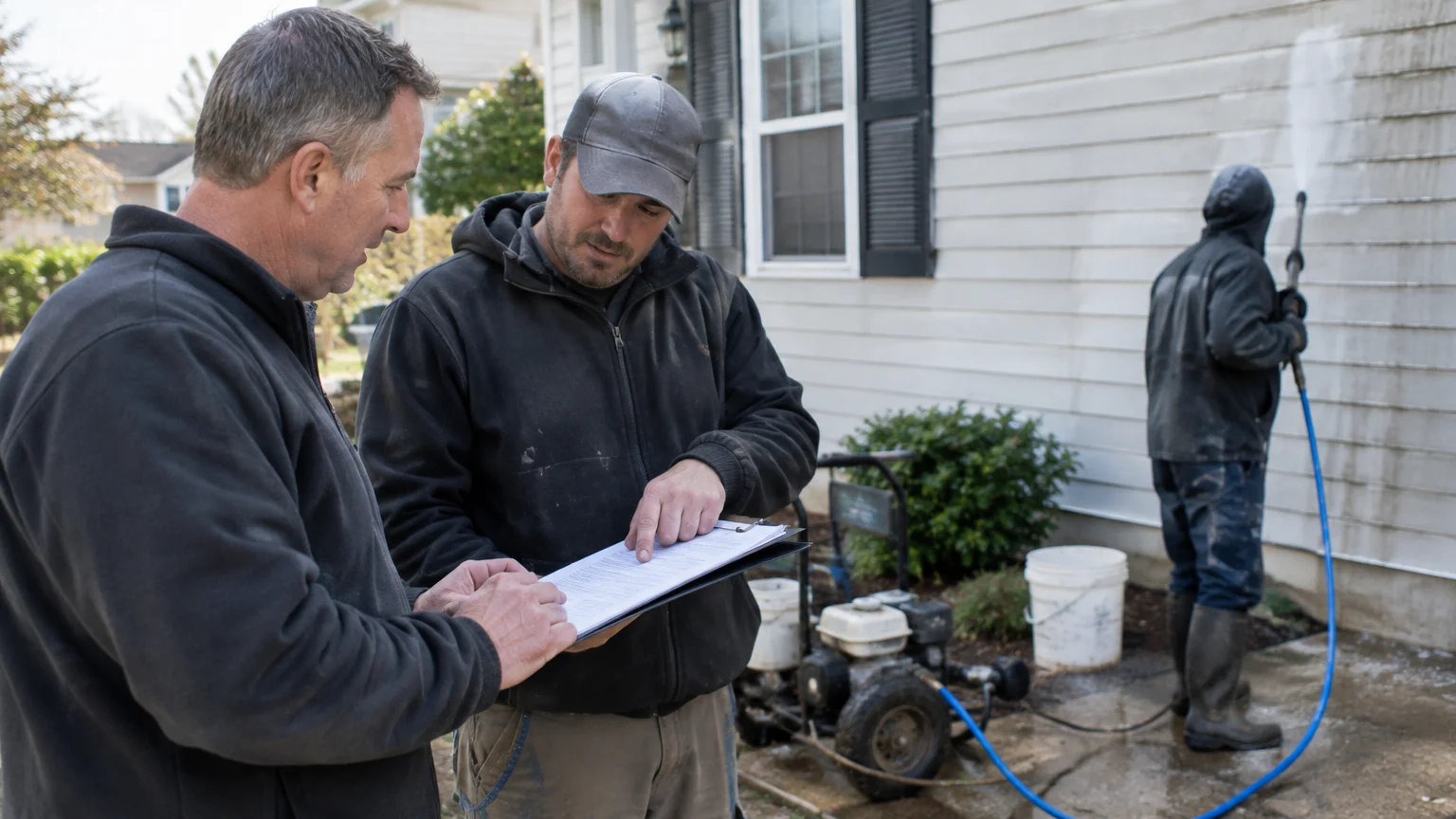
Professional help makes sense when the surface is fragile, high, badly stained, or close to valuable property. It also helps when runoff, access, or electrical safety creates concern. The goal is to avoid damage, not to hire for every small task.
A homeowner may handle light sweeping, loose debris, and simple hose rinsing. These are reasonable DIY jobs when care instructions allow them. Stop if the surface changes, water enters a building, or the spray cannot be controlled.
Signs a DIY cleaning project may damage the surface
Warning signs include loose paint, soft wood, cracked concrete, weak mortar, peeling sealer, unknown coatings, and water stains inside the building. A surface that has never been cleaned may need a small test first.
Other concerns include roofs, ladders, tall walls, and slippery slopes. A pressure washer can knock down objects, spread dirty runoff, and injure people nearby. Safety steps do not remove every risk.
A hotel, store, or rental property may need a planned schedule. How often a hotel should be cleaned depends on traffic, weather, building material, trees, and visible soil. A site review is more useful than one fixed rule.
What a professional evaluation can help determine
An evaluation can identify the material, stain, access limits, and safest method. It can show whether a surface cleaner, wand, soft wash, pretreatment, or hand work is needed. This keeps a strong spray from becoming the only plan.
Pressure Washing Slidell serves property owners in the main Slidell area, including Olde Towne Slidell, Eden Isles, Pearl River, Lacombe, North Shore, and nearby communities. The team can review driveways, patios, fences, siding, and pool decks before choosing an approach.
Pressure washing costs depend on surface size, access, material, stain type, preparation, and urgency. Large or delicate jobs usually need more planning than a small, open concrete area. The final cost is confirmed on a quote after the site needs are reviewed.
Key takeaways
- A surface cleaner is made for broad, fairly level areas.
- A wand gives better control around edges, corners, and vertical surfaces.
- Pressure should match the material, not only the stain.
- Oil, rust, algae, and mildew may need different treatments.
- Simple, low-risk upkeep may be safe for homeowners, but high or damaged areas need care.
Frequently Asked Questions
Is a surface cleaner better than a wand for a driveway?
A surface cleaner is often better for the open area of a sound concrete driveway. Its rotating bar can create an even pattern and reduce visible wand lines. A wand still works well along edges, steps, cracks, and places where the housing cannot sit flat.
What PSI pressure washer is needed to clean siding?
There is no safe PSI setting for every type of siding. Vinyl, painted wood, fiber cement, and older materials may need different pressure and spray distance. Follow the material maker’s guidance, test a hidden spot, and consider soft washing when growth is the main issue.
Can a pressure washing surface cleaner damage concrete?
Yes. It can damage concrete that is weak, cracked, flaking, or poorly repaired. It can also leave marks when held still or moved too slowly. A test area, proper tips, steady movement, and the right flow can lower risk, but they cannot repair damaged concrete.
Should algae be cleaned with high pressure?
Not always. Algae may respond better to a suitable cleaning solution and a controlled rinse. High pressure can leave marks or harm nearby materials without solving the cause. Shade, moisture, drainage, and surface type should guide the plan.
How often should a home or patio be pressure washed?
There is no single schedule for every property. Cleaning needs depend on weather, shade, trees, foot traffic, drainage, and material. Watch for slippery growth, dark buildup, and visible soil. Early light cleaning may be gentler than waiting for heavy buildup.
Conclusion
A surface cleaner and a wand solve different cleaning problems. A surface cleaner suits broad, level areas. A wand handles edges, corners, walls, and detail work. The safest method depends on the material, condition, stain, flow, and operator control.
Pressure Washing Slidell can help property owners choose a practical method for the surface at hand. Contact us to discuss the right approach for your property.